 Give Us A Call! 702-276-6534

Your water heater probably isn’t completely silent. You may occasionally hear water moving, the burner operating, or the system cycling as it heats your water.
But loud popping, cracking, knocking, or rumbling sounds are different.
For homeowners in Las Vegas and throughout Southern Nevada, one of the most common things to consider when a traditional tank water heater starts making unusual noises is sediment and mineral buildup.
Our area’s very hard water can make water heater maintenance particularly important. Here’s what those noises may be telling you.
Why Is My Water Heater Making a Popping Noise?
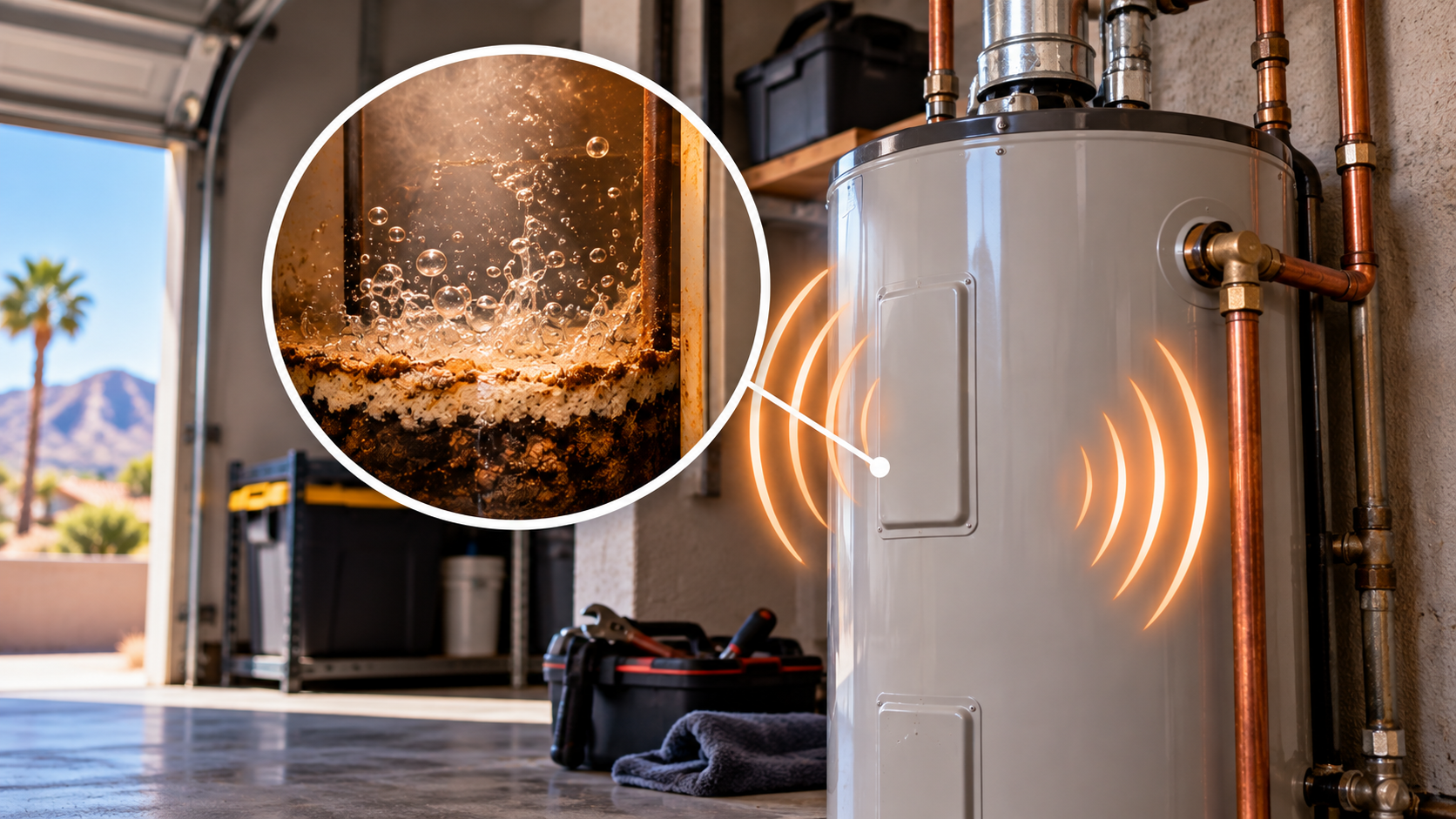
Popping or rumbling from a traditional tank-style water heater can occur when sediment accumulates at the bottom of the tank.
Every time your water heater fills, minerals and other material present in the water enter the tank with it. As the water is repeatedly heated, some of that material can settle toward the bottom.
Over time, a layer of sediment can develop.
Water can become trapped beneath or within that sediment. When the burner or heating element heats the tank, that trapped water heats and moves through the buildup.
The resulting bubbling and movement can create the popping, crackling, or rumbling sounds you hear from outside the tank.
Las Vegas Hard Water Can Make Sediment a Bigger Concern
If you’ve lived in Southern Nevada for long, you’ve probably seen evidence of our hard water.
That familiar white or chalky material around faucets, showerheads, and fixtures comes from minerals dissolved in the water.
Those minerals don’t only appear where you can see them.
A traditional water heater continuously processes the same mineral-rich water, which means deposits and sediment can accumulate inside the tank over time.
The amount of buildup will vary based on the home’s water, maintenance history, water treatment, usage, and age of the water heater.
That’s one reason routine water heater maintenance can be especially useful in Las Vegas and Henderson.
Is a Rumbling Water Heater Dangerous?
A noisy water heater doesn’t automatically mean it’s about to fail.
However, persistent or increasingly loud noises shouldn’t simply be ignored.
Heavy sediment buildup can make the water heater work harder to heat the water effectively. Depending on the condition and age of the unit, unusual noises may also be one indication that the heater deserves inspection or maintenance.
The sound itself isn’t enough to diagnose the condition of the water heater.
A relatively new unit with sediment buildup is a different situation from an older tank showing corrosion, leaking water, and other signs of deterioration.
Looking at the entire condition of the system matters.
Other Water Heater Sounds to Pay Attention To
Not every strange water heater sound is caused by sediment.
Different noises can potentially point toward different parts of the system.
Popping or Crackling
Sediment or mineral buildup inside a tank is one possible cause, particularly when the sound occurs while the water is heating.
Rumbling
A deeper rumbling sound can also be associated with sediment moving around at the bottom of a tank during heating.
Hissing
A hissing sound can have several potential causes depending on whether the water heater is gas or electric and where the sound originates.
Banging or Knocking
Not every banging sound actually originates inside the water heater. Plumbing pipes can also make noise as water flow changes.
Dripping or Sizzling
If you hear dripping or sizzling around a water heater, look for signs of moisture. Water contacting a hot component can create unusual sounds and may indicate a leak that needs attention.
Because several problems can produce similar noises, identifying exactly where the sound is coming from is important.
Can Flushing a Water Heater Help?
Flushing a traditional tank water heater is intended to remove accumulated sediment from the bottom of the tank.
For a water heater that is otherwise in good condition, routine flushing can be an important part of maintenance—particularly in an area with hard water like Southern Nevada.
However, the condition and maintenance history of the water heater matter.
An older tank that hasn’t been maintained for years isn’t necessarily the same situation as a newer unit receiving routine service. If you’re unsure about the condition of your water heater, having it inspected before deciding what maintenance it needs is a sensible approach.
How Often Should a Water Heater Be Flushed in Las Vegas?
There isn’t one maintenance interval that’s right for every home.
Southern Nevada’s hard water can cause sediment to accumulate faster than homeowners may expect, so water heaters here may benefit from more frequent attention than units operating with softer water.
Pipe Pros generally recommends having a traditional tank water heater flushed about every six months in Southern Nevada.
For homes with a properly operating, high-performing water softener, that interval may sometimes be extended to approximately 12 months depending on the condition of the system and water heater.
The age of the unit, household water usage, water quality, and previous maintenance should all be considered.
Don’t Forget About the Anode Rod
Sediment isn’t the only maintenance consideration inside a traditional water heater.
The anode rod is designed to help protect the steel tank against corrosion. It does this by deteriorating over time so the tank itself doesn’t corrode as quickly.
Eventually, an anode rod can become depleted.
Having the anode rod inspected and replacing it when appropriate can be an important part of maximizing the useful life of a traditional tank water heater.
This is particularly worth discussing if you’re already having the unit inspected because of noises or sediment concerns.
When Is Noise a Sign That Your Water Heater May Need More Than Maintenance?
Age and overall condition matter.
If your water heater is making unusual noises and you also notice other problems, it may be time for a more thorough evaluation.
Watch for:
* Rust or visible corrosion
* Water around the tank
* Reduced hot-water capacity
* Inconsistent water temperatures
* Discolored hot water
* Repeated problems despite maintenance
* A tank approaching or beyond its expected service life
At some point, continuing to repair an aging tank may make less sense than replacing it.
A professional inspection can help determine which situation you’re dealing with.
Should You Ignore a Popping Water Heater If It Still Works?
Probably not.
The fact that you’re still getting hot water doesn’t necessarily mean everything inside the tank is in ideal condition.
Think of the noise as information.
If your water heater suddenly starts making sounds it didn’t make before—or those sounds are becoming louder or more frequent—it’s worth figuring out why.
Sometimes maintenance may be all that’s needed. In other cases, the noise may be one of several signs that the unit is aging or developing a problem.
Is Your Water Heater Making Noise in Las Vegas?
If your water heater is popping, rumbling, knocking, or making sounds you haven’t heard before, Pipe Pros can help determine what’s causing it.
Pipe Pros serves homeowners throughout Las Vegas and Southern Nevada with professional water heater and plumbing services. Whether your tank needs routine maintenance, further diagnosis, or it’s time to discuss replacement, understanding the condition of the system is the place to start.
Water heater making strange noises? Contact Pipe Pros for professional water heater service in Las Vegas and Southern Nevada.
Disclaimer: This article was created by Two Four Media for general informational purposes only and is not intended as professional plumbing advice. Plumbing systems and situations can vary. For questions about your specific plumbing needs, diagnosis, repairs, or service, please contact Pipe Pros directly.