 Give Us A Call! 702-276-6534

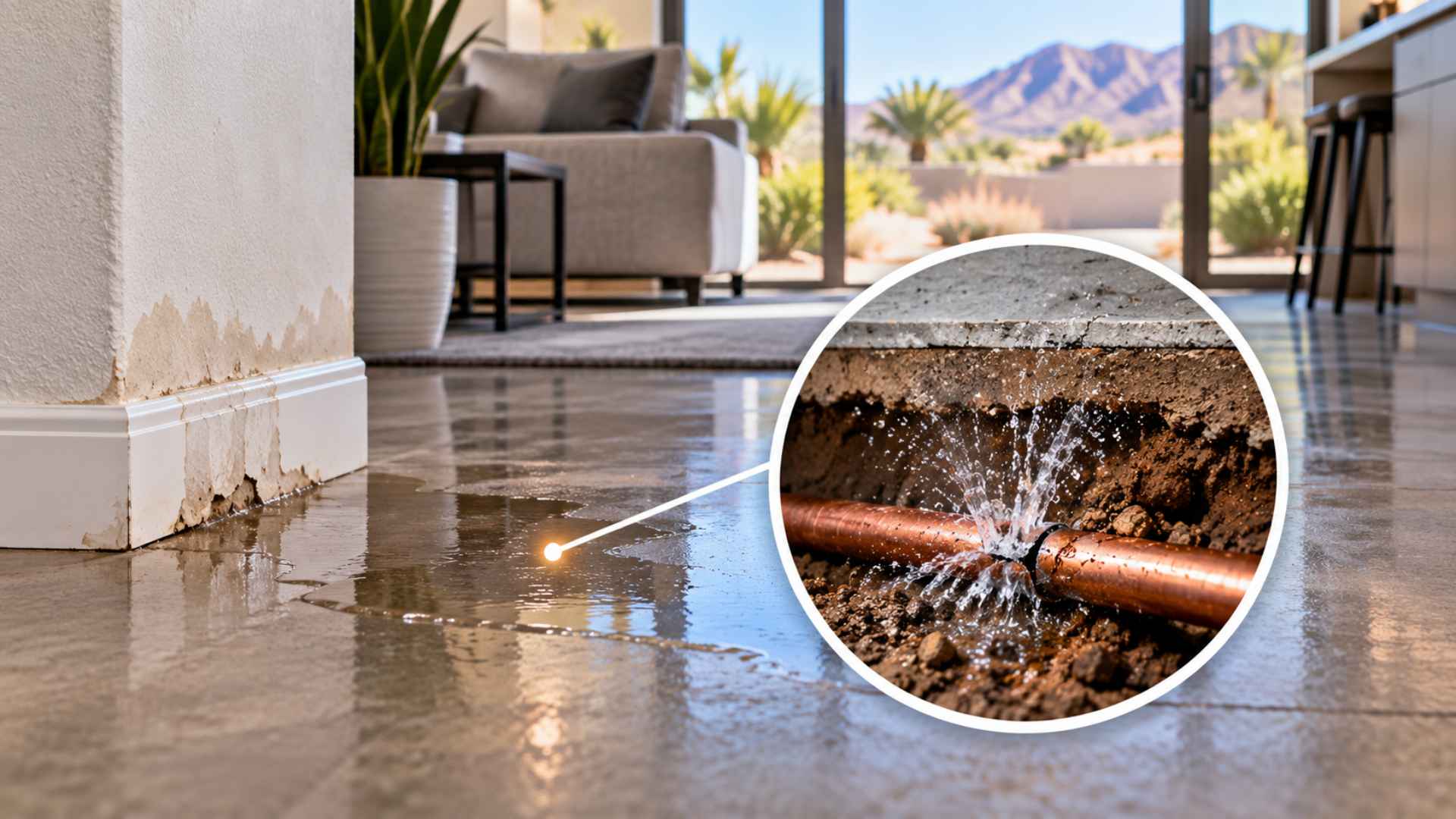
A plumbing leak under your home is easy to miss. Unlike a dripping faucet or leaking pipe beneath a sink, a slab leak can develop underneath the concrete foundation with very few obvious signs at first.
That can make early detection especially important.
Many homes throughout Las Vegas, Henderson, and Southern Nevada are built on concrete slab foundations, with portions of the plumbing running beneath or through the slab. If one of those water lines develops a leak, water can escape beneath the home before you ever see it.
Fortunately, slab leaks often leave clues. Here are some warning signs Southern Nevada homeowners should know.
What Is a Slab Leak?
A slab leak is generally a leak in a water line located beneath a home’s concrete foundation.
These leaks can develop for several reasons, including pipe deterioration, corrosion, movement, installation issues, or damage that develops over time.
Because the leaking pipe isn’t readily visible, determining exactly where the problem is located may require professional leak detection rather than simply looking for water.
1. An Unexplained Increase in Your Water Bill
One of the first signs of a hidden plumbing leak may show up on your monthly water bill.
If your household’s water use hasn’t changed but your bill suddenly increases, water may be escaping somewhere in the plumbing system.
A higher bill doesn’t automatically mean you have a slab leak. Running toilets, irrigation problems, dripping fixtures, and other leaks can also increase water consumption.
But an unexplained increase—especially when combined with other warning signs—is worth investigating.
2. You Hear Running Water When Everything Is Turned Off
Your home should generally be quiet when nobody is using water.
If you hear water running, hissing, or flowing when faucets, showers, toilets, appliances, and irrigation are all off, there may be a leak somewhere in the system.
With a slab leak, the sound can sometimes appear to come from the floor or inside a wall near the foundation.
Don’t assume an unexplained sound of running water is normal.
3. Warm or Hot Spots on the Floor
This is one of the more distinctive potential signs of a leak involving a hot-water line.
If hot water is escaping beneath the slab, it may warm the concrete and flooring above it.
You might notice that one area of tile, laminate, or another flooring surface feels noticeably warmer than the surrounding floor.
A warm spot doesn’t prove there’s a slab leak, but an unexplained hot area—particularly when combined with increased water usage or other plumbing symptoms—deserves attention.
4. Damp Flooring or Unexplained Moisture
Water from beneath the slab can eventually find its way into areas where it becomes visible.
Depending on the location and severity of the leak, you may notice:
* Damp carpet
* Moisture along baseboards
* Discoloration in flooring
* Warped or lifting flooring
* Water appearing without an obvious source
* Dampness near an interior wall
In Southern Nevada’s dry climate, unexplained indoor moisture can be particularly noticeable.
If you repeatedly dry an area only for the moisture to return, there may be a hidden source.
5. Your Water Meter Keeps Moving
Your water meter can provide another clue that water is being used somewhere on the property.
Turn off faucets and water-using appliances and make sure nobody is using water inside or outside the home.
If the meter continues indicating water usage, there may be a leak somewhere in the system.
This doesn’t tell you where the leak is located, but it can help establish that water may be escaping when it shouldn’t be.
6. Water Pressure Has Suddenly Dropped
A significant leak can affect the amount of water reaching your fixtures.
If you’ve noticed a sudden or unexplained drop in water pressure throughout your home, a plumbing leak is one possible cause.
There are several other reasons for low water pressure, including pressure-regulator problems, partially closed valves, mineral buildup, or water-supply issues.
But when low pressure occurs alongside a higher water bill, sounds of running water, or unexplained moisture, it’s worth having the plumbing checked.
7. Cracks, Flooring Changes, or Baseboard Damage
Water moving beneath or around a home’s slab can sometimes contribute to visible changes inside the house.
You may notice flooring beginning to lift, baseboards becoming damaged, or cracks that weren’t previously present.
Not every crack is caused by plumbing. Homes and concrete foundations can develop cracks for many reasons.
The important thing is to look at the complete picture. New physical changes combined with signs of unexplained water can point toward a plumbing issue that needs further investigation.
8. Musty or Unusual Odors
Southern Nevada may be dry outside, but moisture trapped beneath flooring or inside building materials can create conditions for musty odors.
If an area of your home suddenly smells damp or musty and you can’t identify an obvious source, hidden moisture may be present.
Simply covering the smell doesn’t address whatever is causing it.
Finding the moisture source is the important part.
Why Do Slab Leaks Happen?
There isn’t one single cause.
Depending on the home and plumbing system, leaks beneath a slab may be associated with aging or deteriorating pipes, corrosion, movement, abrasion, water conditions, installation problems, or other damage.
That’s why properly diagnosing the location and cause matters.
Finding evidence that water is leaking is only the first step. The next is determining where it’s coming from and the appropriate way to repair it.
Can You Find a Slab Leak Without Tearing Up the Floor?
Homeowners sometimes imagine that finding an underground leak means immediately tearing into floors throughout the house.
That’s not necessarily the case.
Professional leak detection can help narrow down the location of a hidden plumbing leak before decisions are made about accessing or repairing the affected line.
The appropriate method depends on the plumbing system, location of the leak, construction of the home, and other factors.
This is one reason professional diagnosis is valuable when a slab leak is suspected.
Don’t Ignore a Possible Slab Leak
A hidden water leak generally doesn’t improve on its own.
Even if the symptoms initially seem minor, continuing water loss can increase utility costs and potentially contribute to damage around the affected area.
Pay particular attention when several warning signs occur together.
For example, a higher water bill by itself could have many explanations. But a higher bill combined with a warm floor, sounds of running water, and a meter showing continued usage is much more reason to investigate.
When Should You Call a Plumber?
Consider having your plumbing checked if you notice:
* An unexplained increase in water usage
* Running-water sounds when fixtures are off
* Warm or hot areas on the floor
* Damp flooring or baseboards
* Unexplained indoor moisture
* A water meter indicating continued usage
* Sudden changes in water pressure
* Several slab-leak warning signs occurring together
The sooner the source is identified, the sooner you can determine what needs to be done.
Think You May Have a Slab Leak in Las Vegas?
If you’re noticing signs of a possible hidden plumbing leak, Pipe Pros can help determine what’s happening.
Pipe Pros serves homeowners throughout Las Vegas and Southern Nevada with professional plumbing and leak-detection services. Rather than guessing where water may be coming from, the goal is to identify the source and determine the appropriate next step for your home.
Concerned about a possible slab leak? Contact Pipe Pros for professional plumbing service in Las Vegas and Southern Nevada.
Disclaimer: This article was created by Two Four Media for general informational purposes only and is not intended as professional plumbing advice. Plumbing systems and situations can vary. For questions about your specific plumbing needs, diagnosis, repairs, or service, please contact Pipe Pros directly.