 Give Us A Call! 702-276-6534

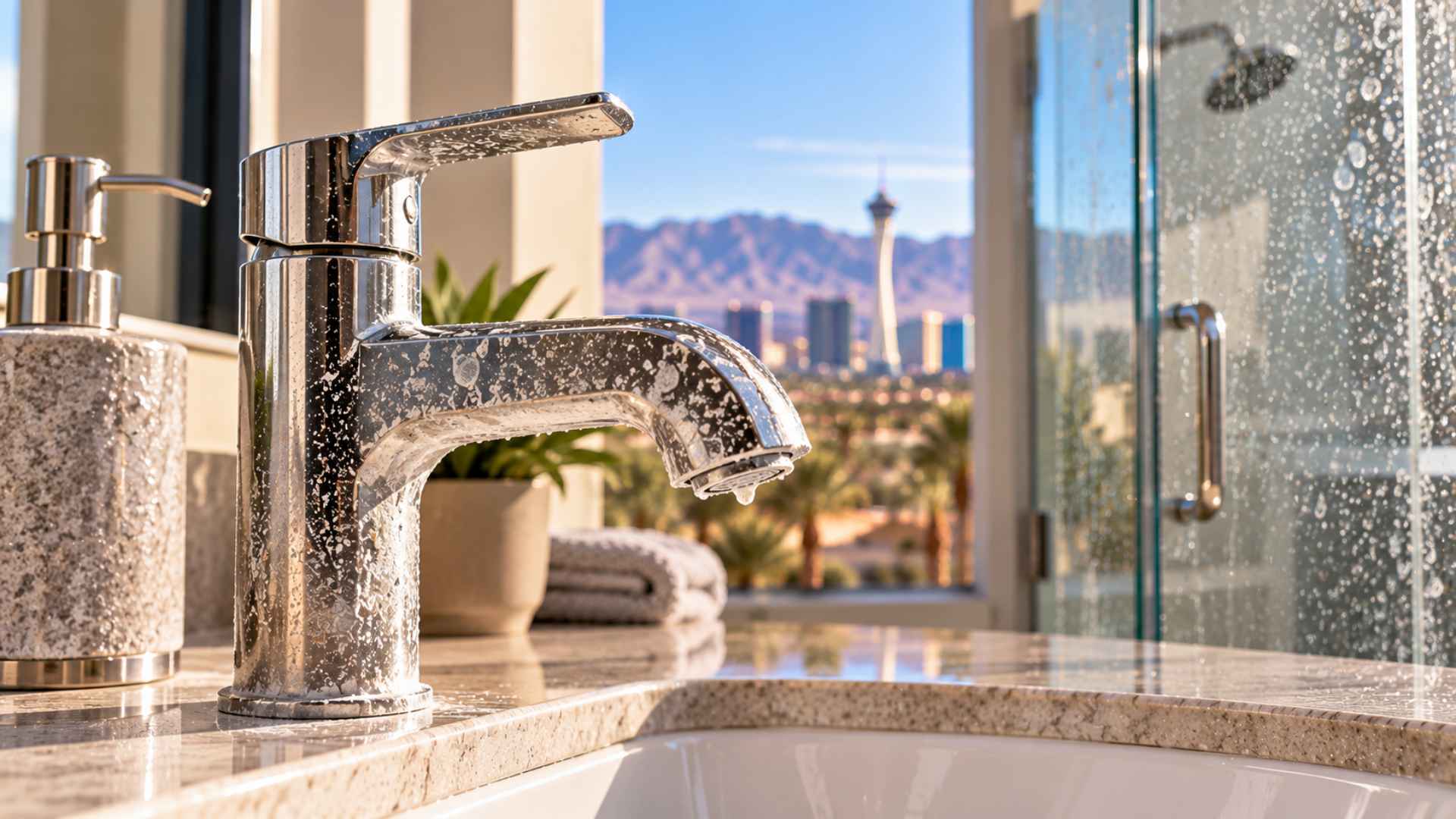
White spots on your faucets. Chalky residue around the showerhead. Cloudy marks on glass shower doors that seem to come back as soon as you clean them.
If you live in Las Vegas, you’re probably familiar with all of them.
Those stubborn white deposits are one of the most visible signs of Southern Nevada’s hard water. The minerals naturally present in our water can leave residue behind as water evaporates, creating buildup on everything from bathroom fixtures to kitchen faucets.
But the spots you can see are only part of the story. The same minerals can also accumulate in plumbing fixtures, water heaters and water-using appliances over time.
Here’s what Las Vegas homeowners should know about hard water and what can realistically be done about it.
Las Vegas Has Very Hard Water
Hard water contains dissolved minerals, primarily calcium and magnesium.
The Las Vegas Valley’s water supply is considered very hard, which is why mineral deposits are such a common sight in homes throughout Southern Nevada.
Whether you’re in Summerlin, Spring Valley, Enterprise, Centennial Hills, Mountains Edge, Southern Highlands or another part of the Las Vegas Valley, you’re likely dealing with the effects of mineral-rich water.
Hard water isn’t unusual, but the degree of hardness in Southern Nevada makes its effects especially noticeable.
Those White Spots Are Mineral Deposits
When water lands on a faucet, shower door, countertop or sink and then evaporates, the water disappears but some of its dissolved minerals remain.
That’s what creates the familiar white or chalky residue.
You may notice buildup around:
- Faucet aerators
- Showerheads
- Sink drains
- Glass shower doors
- Bathtub fixtures
- Kitchen faucets
- Tile and grout
- Appliances that use water
Repeated exposure allows those deposits to accumulate.
That’s why simply wiping away a water spot doesn’t prevent another one from appearing the next time the surface gets wet and dries.
Your Showerhead Can Slowly Lose Performance
Mineral buildup isn’t only cosmetic.
Look closely at a showerhead in a Las Vegas home and you may see white deposits forming around individual spray openings.
As those openings become restricted, the spray pattern can change. Some openings may stop flowing properly while others spray in different directions.
The result can feel like a water-pressure problem even though the home’s actual water pressure hasn’t changed.
Faucet aerators can experience the same issue.
If one faucet or shower has noticeably weaker flow than the rest of the house, checking for mineral buildup at the fixture is a reasonable place to start.
Hard Water and Your Water Heater
Your water heater handles a lot more water than your bathroom faucet.
In a traditional tank-style water heater, minerals and sediment can accumulate toward the bottom of the tank over time.
As buildup increases, homeowners may begin noticing symptoms such as popping or rumbling noises while the water heater operates.
Routine maintenance can be particularly important in Southern Nevada because of our hard-water conditions.
If your water heater hasn’t been inspected or maintained in years, the lack of visible problems on the outside doesn’t necessarily tell you what’s accumulating inside.
Appliances Deal With Hard Water Too
Any appliance regularly using water may be exposed to mineral buildup.
That can include:
- Dishwashers
- Washing machines
- Refrigerators with water dispensers
- Ice makers
- Coffee makers
- Tank and tankless water heaters
You may notice spotting on dishes and glassware, deposits around appliance connections or mineral residue in areas where water regularly evaporates.
The effect will vary depending on the appliance, household usage and whether the home has any type of water treatment.
Hard Water Can Make Cleaning Frustrating
This is probably the effect homeowners notice most often.
You clean the shower glass until it’s spotless. A few showers later, the cloudy appearance starts coming back.
You polish the faucet. Soon afterward, white deposits begin forming around the base again.
That’s because cleaning removes the deposits already on the surface. It doesn’t change the mineral content of the water creating them.
Regular cleaning can keep buildup under control, but homeowners dealing with significant hard water may find themselves repeating the process constantly.
Is Hard Water the Same as Contaminated Water?
No.
Water hardness describes the concentration of certain dissolved minerals in the water. It isn’t the same thing as saying the water is contaminated or unsafe.
That’s an important distinction.
The frustration with hard water is generally related to scale, mineral deposits, cleaning, fixture performance and its effects on plumbing equipment—not simply the presence of visible white residue.
Can a Water Softener Help?
A properly sized and operating water softener can reduce the hardness minerals reaching the home’s plumbing and fixtures.
Instead of simply removing spots after they appear, a softener addresses the minerals responsible for much of the scale in the first place.
For Las Vegas homeowners tired of constantly cleaning fixtures and dealing with hard-water buildup, that’s one reason whole-home water softening is worth considering.
However, not every water-treatment system does the same thing.
Water Softening and Water Filtration Aren’t the Same Thing
These terms are often used interchangeably, but they’re not necessarily the same.
A traditional water softener is designed specifically to address hardness minerals such as calcium and magnesium.
Water filtration systems may be designed to address other characteristics of the home’s water.
Depending on what a homeowner wants to accomplish, one system or a combination of treatment methods may make sense.
Before buying equipment based on advertising alone, it’s worth understanding the actual problem you’re trying to solve.
If the problem is primarily scale and hard-water buildup, make sure the system you’re considering is actually designed to address hardness.
What Can You Do Without Installing a Water Softener?
Not every homeowner is ready to install a whole-home system.
Regularly cleaning faucets, showerheads and aerators can help keep visible mineral buildup under control. Removing deposits before they become severe can also help maintain normal flow through fixtures.
Water heaters should receive appropriate maintenance based on their type, condition and manufacturer recommendations.
But these steps manage the effects of hard water. They don’t change the hardness of the water entering the home.
If mineral buildup is a constant problem throughout the house, water treatment may be worth discussing.
Already Have a Water Softener but Still Seeing White Buildup?
Having a water softener installed doesn’t guarantee it’s operating correctly forever.
If you’ve noticed hard-water symptoms returning, the system may need attention.
Changes worth noticing include:
- White scale returning rapidly
- Soap behaving differently
- Increased spotting on glassware
- Mineral buildup around fixtures
- Changes in how the water feels
- Unexpected changes in salt usage
The issue could involve settings, maintenance, equipment condition or another part of the system.
Rather than assuming the softener is working because it’s plugged in and has salt, its actual operation may need to be checked.
Hard Water Is Part of Owning a Home in Southern Nevada
From older homes in central Las Vegas and Spring Valley to newer communities in Summerlin, Enterprise and the southwest valley, hard water is something homeowners throughout the area encounter.
Those white spots aren’t mysterious. They’re visible evidence of minerals left behind after the water evaporates.
Cleaning can address what you see. Proper plumbing maintenance can help manage buildup in fixtures and equipment. And for homeowners who want to address hardness throughout the house, a properly selected water-treatment system may provide a longer-term solution.
Need Help With Hard Water or Mineral Buildup in Las Vegas?
If mineral buildup is affecting your faucets, showerheads, water heater or other plumbing equipment, Pipe Pros can help evaluate what’s happening and discuss options appropriate for your home.
Pipe Pros serves homeowners throughout Las Vegas and Southern Nevada with professional plumbing, water heater and water-treatment services.
Contact Pipe Pros to discuss hard water, mineral buildup or water-treatment options for your Las Vegas home
Disclaimer: This article was created by Two Four Media for general informational purposes only and is not intended as professional plumbing advice. Plumbing systems and situations can vary. For questions about your specific plumbing needs, diagnosis, repairs, or service, please contact Pipe Pros directly.