Check Us Out

Tag: running toilet

That Toilet Shouldn’t Keep Running: What Henderson Homeowners Need to Know
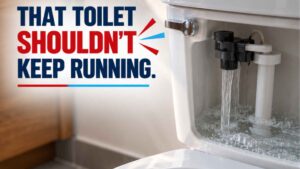
A toilet that keeps running may seem like a minor annoyance. You hear the tank refill every few minutes, jiggle the handle, and eventually get used to the sound.

But a running toilet isn’t something you should ignore.

When water continuously moves from the tank into the bowl, your toilet may be wasting water around the clock. What starts as a small plumbing problem can lead to higher water bills and, depending on the cause, eventually require a repair.

If your toilet in Henderson or the Las Vegas Valley seems to have a mind of its own, here’s what may be happening.

Why Does a Toilet Keep Running?

A toilet is actually a fairly simple system. After you flush, water leaves the tank and enters the bowl. The tank then refills until the water reaches the proper level.

Once it reaches that level, the fill valve should shut the water off.

When something inside the tank isn’t sealing, moving, or shutting off correctly, water can continue flowing.

Several components can cause the problem.

1. A Worn or Damaged Flapper

The flapper is the rubber seal located at the bottom of the toilet tank. When you flush, it lifts and allows water to flow into the bowl. It should then fall back into place and create a watertight seal.

Over time, the flapper can become worn, warped, cracked, or covered with mineral buildup.

When it no longer seals properly, water slowly leaks from the tank into the bowl. The water level in the tank drops, the fill valve turns on again, and suddenly you have a toilet that seems to refill over and over.

This is one of the most common causes of a running toilet.

2. Problems With the Fill Valve

The fill valve controls the water entering the toilet tank.

A properly functioning valve shuts off when the tank reaches the correct water level. If the valve becomes worn or develops a problem, it may continue allowing water into the tank.

Sometimes you’ll hear a constant hiss. Other times, the toilet may periodically refill even though nobody has used it.

If adjusting the water level doesn’t correct the problem, the fill valve may need to be repaired or replaced.

3. The Water Level Is Too High

Sometimes the toilet components are working, but the tank is simply filling with too much water.

Inside the tank is an overflow tube designed to prevent water from spilling onto your bathroom floor. If the tank’s water level is set too high, excess water can continuously drain into that tube.

The fill valve then keeps replacing it.

The result is a toilet that never completely stops running.

4. A Chain or Handle Problem

The chain connecting the toilet handle to the flapper needs a little slack to work correctly.

If it’s too tight, the flapper may never fully close.

If it’s tangled, damaged, or incorrectly positioned, it can create the same problem.

This is one of the easier things homeowners can visually inspect. Remove the tank lid and watch what happens when you flush. The flapper should lift freely and then settle completely back into place.

Las Vegas Valley Hard Water Can Make Things Worse

Southern Nevada homeowners also have another factor to consider: hard water.

Minerals in the water can accumulate on plumbing fixtures and components over time. Inside a toilet tank, mineral deposits can interfere with moving parts or prevent seals from closing as tightly as they should.

You may notice white or chalky buildup around components inside the tank.

Hard water isn’t necessarily the original cause of every running toilet, but mineral buildup can contribute to plumbing components wearing out or operating poorly.

How Much Water Can a Running Toilet Waste?

The amount depends on how severe the leak is.

A toilet with a small leak may quietly lose water without appearing to have a major problem. A badly malfunctioning toilet can move a surprising amount of water through the tank.

That’s why an unexplained increase in your water bill shouldn’t automatically be dismissed.

If your household’s water habits haven’t changed but your bill suddenly has, toilets are one of the places worth checking.

Try This Simple Toilet Leak Test

There’s an easy way to check whether water is leaking from the tank into the bowl.

Add a few drops of food coloring to the water inside the toilet tank. Don’t flush.

Wait approximately 15–30 minutes.

If colored water begins appearing in the bowl, water is getting past the seal somewhere inside the tank.

That doesn’t necessarily tell you which component has failed, but it confirms that water is moving when it shouldn’t be.

When Is a Running Toilet a DIY Repair?

Some toilet problems are relatively straightforward.

A homeowner comfortable with basic repairs may be able to replace a worn flapper, adjust the chain, or change the tank’s water level.

But if you’ve replaced the obvious parts and the toilet continues running, there’s probably more going on.

You should also consider calling a plumber if the toilet frequently clogs, leaks around the base, rocks or moves, doesn’t flush correctly, or shows signs of water damage around the floor.

Those symptoms can point to problems beyond the components inside the tank.

Don’t Ignore the Sound

It’s easy to become accustomed to a toilet that occasionally turns itself on.

But your plumbing shouldn’t be using water when nobody is using the fixture.

That familiar sound in the middle of the night is essentially your toilet telling you something isn’t working correctly.

Fixing the problem early can help prevent unnecessary water waste and give you a chance to address a small plumbing issue before it becomes a bigger headache.

Need Help With a Running Toilet in Henderson?

If you’ve adjusted the toilet, replaced the obvious parts, or simply don’t want to spend your weekend troubleshooting plumbing, Pipe Pros Plumbing & Mechanical can help.

Our team serves homeowners throughout Henderson and the Las Vegas Valley with professional plumbing repairs, diagnostics, water heater service, drain issues, and more.

We’ll determine why your toilet keeps running, explain what needs to be repaired, and get your plumbing working the way it should.

That toilet shouldn’t keep running. Let Pipe Pros take a look.


Disclaimer: This article was created by Two Four Media for general informational purposes only and is not intended as professional plumbing advice. Plumbing systems and situations can vary. For questions about your specific plumbing needs, diagnosis, repairs, or service, please contact Pipe Pros directly.

 

Why Is My Water Bill Suddenly So High in Las Vegas?


Opening your water bill and seeing a number that’s dramatically higher than usual can be a nasty surprise—especially when you don’t think your household is using any more water than normal.

For homeowners in Las Vegas and across Southern Nevada, a sudden increase in water usage can have several explanations. Sometimes it’s seasonal outdoor watering. Other times, a running toilet, irrigation problem, hidden plumbing leak, or even a leak beneath the home’s slab may be quietly using water around the clock.

If your Las Vegas water bill suddenly jumped, here are some of the first things worth investigating.

1. Start by Comparing Your Actual Water Usage

Before assuming you have a plumbing problem, compare your current water usage with previous billing periods.

The Las Vegas Valley Water District uses a tiered residential rate structure, meaning the amount charged per 1,000 gallons can increase as consumption rises. Some high-use households may also incur an excessive-use charge when consumption exceeds seasonal thresholds.

That means a significant increase in water consumption can sometimes have an even larger impact on the final bill.

Look at how many gallons you’re actually using rather than comparing only the dollar amount.

If your consumption has suddenly increased without an obvious explanation, it’s time to start looking for where that water is going.

2. A Running Toilet Can Waste Water Without Getting Much Attention

One of the first places to check is the toilet.

A toilet doesn’t have to be visibly overflowing to waste water. A worn flapper, malfunctioning fill valve, incorrect water level, or other internal problem can allow water to continuously move through the tank.

Because the toilet may otherwise appear to work normally, this can continue unnoticed.

Walk through your home and listen to each toilet. If you hear water running or a toilet periodically refilling when nobody has used it, it deserves a closer look.

This is particularly easy to overlook in guest bathrooms that aren’t used very often.

3. Check for Hidden Plumbing Leaks

Not every plumbing leak leaves a puddle on the floor.

Water lines run through walls, ceilings, cabinets, and other concealed areas. Depending on the construction of the home, some plumbing may also run beneath the concrete slab.

Watch for warning signs such as:

* Damp or discolored drywall
* Moisture inside cabinets
* Warped baseboards or flooring
* Unexplained musty odors
* Sounds of running water
* Warm areas on the floor
* Unexplained drops in water pressure
* Water appearing where it shouldn’t

A hidden leak may continue using water 24 hours a day, which can add up quickly.

4. Don’t Forget About Slab Leaks

Many homes throughout the Las Vegas Valley are built on concrete slab foundations.

If a water line beneath the slab develops a leak, you may not immediately see water. Instead, the first clue could be an unusually high water bill.

Other potential warning signs can include warm flooring, unexplained moisture, sounds of running water, or changes in water pressure.

Whether you live in an established Las Vegas neighborhood or a newer community in Summerlin, Centennial Hills, Spring Valley, or the southwest valley, unexplained continuous water usage is worth investigating.

Finding the source of a hidden leak is much better than waiting for it to become visible.

5. Your Irrigation System Could Be the Culprit

In Las Vegas, some of the biggest water users are outside the house.

A broken irrigation line, leaking valve, damaged emitter, incorrectly programmed irrigation controller, or malfunctioning sprinkler system can use a surprising amount of water.

Because many irrigation systems operate early in the morning, homeowners may never actually see them running.

Walk around your property and look for:

* Unusually wet areas
* Water pooling near landscaping
* Broken sprinkler heads
* Dripping irrigation components
* Water running into the street
* Areas of unusually rapid plant growth
* Irrigation running when it shouldn’t

This is particularly important during the hotter months when outdoor water usage naturally increases.

6. Seasonal Watering Can Increase Las Vegas Water Bills

A higher bill doesn’t always mean something is broken.

Southern Nevada’s extreme summer temperatures can significantly change outdoor water demand. Landscaping that requires additional watering can push household consumption higher than it was during cooler months.

Swimming pools can also contribute through evaporation and automatic refill systems.

If your bill increases during summer, compare the current period with the same time last year rather than comparing July or August usage with winter consumption.

The important question is whether the increase makes sense for your household and property.

7. Check Your Pool and Automatic Fill System

If you have a swimming pool, don’t overlook it.

Las Vegas heat and low humidity contribute to evaporation, but unusually high water usage around a pool may indicate something beyond normal evaporation.

A pool leak or malfunctioning automatic fill valve can continuously add water without attracting much attention.

Homeowners in communities with a high concentration of backyard pools—such as Summerlin, Southern Highlands, Mountains Edge, and neighborhoods throughout the southwest Las Vegas Valley—should include the pool when investigating unexplained water consumption.

If the autofill seems to be running constantly, determine why.

8. Check Your Water Softener

Hard water is common throughout Southern Nevada, which means many Las Vegas homes use water softeners or other water-treatment equipment.

A malfunctioning water softener can potentially use more water than expected if it regenerates too frequently or develops another operational problem.

If you’ve noticed unusual water usage along with changes in the way your softener operates, have the system checked.

The same applies to other equipment connected to your home’s water supply.

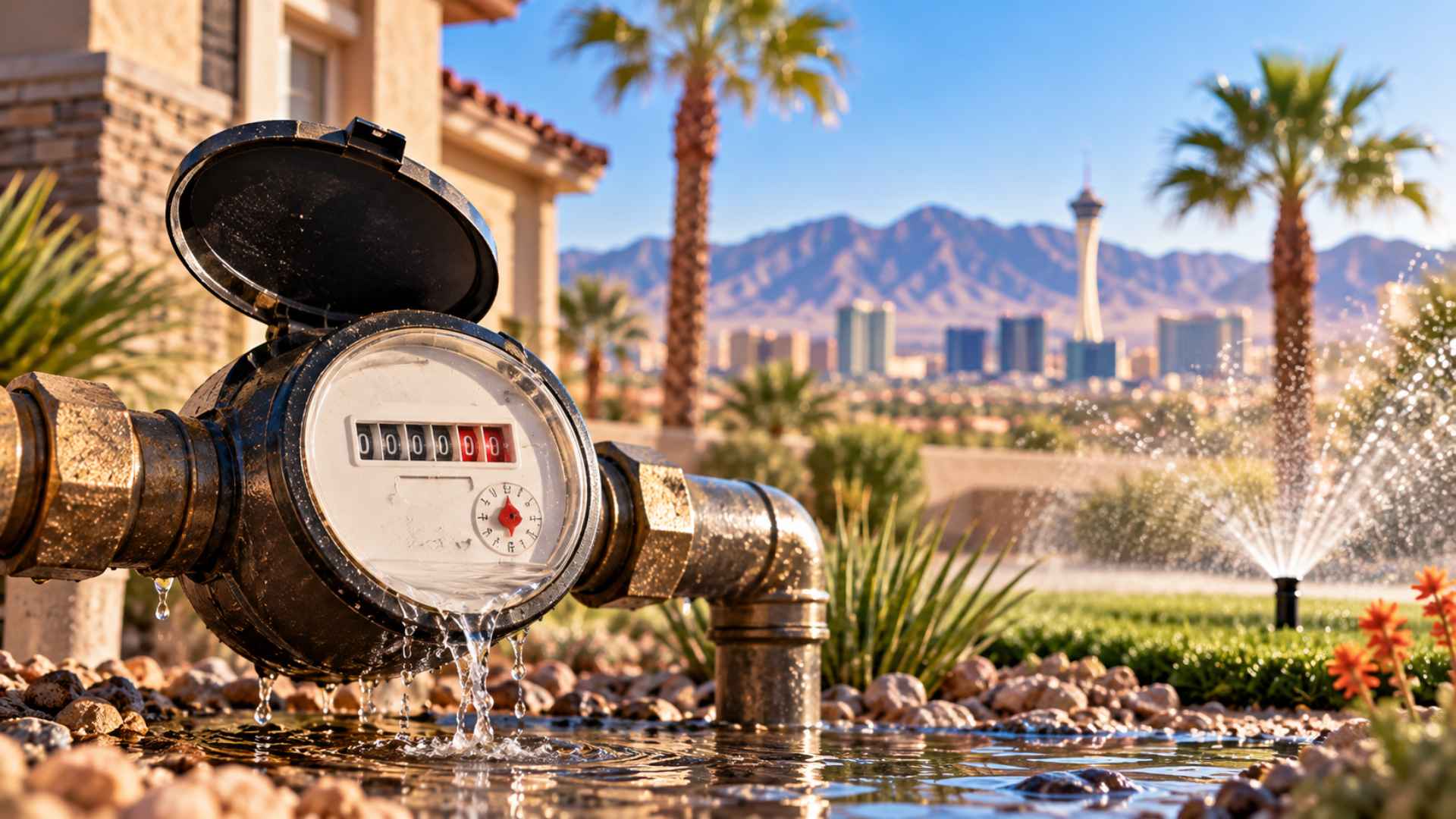
9. Use Your Water Meter to Look for Continuous Usage

Your water meter can provide an important clue.

First, make sure nobody is using water. Turn off faucets, showers, washing machines, dishwashers, irrigation, and other water-using equipment.

Then check the meter.

If it continues registering water usage when everything should be off, water may be flowing somewhere on the property.

That doesn’t tell you exactly where the problem is, but it can help establish that there’s something worth investigating.

10. The Leak Could Be Between the Meter and Your House

There is another section of plumbing homeowners sometimes forget about: the water service line running from the meter toward the house.

A leak in an underground service line may not produce obvious indoor symptoms.

You might notice unusually damp soil, an unexplained wet area, or water usage on the meter even though everything inside the house is turned off.

In Southern Nevada’s dry climate, an area of consistently wet ground without an obvious irrigation source deserves attention.

Why Did My Water Bill Increase So Much From One Leak?

Small leaks can become expensive because they don’t take breaks.

A faucet you use for five minutes is consuming water for five minutes.

A hidden leak can potentially run 24 hours a day for weeks before the next water bill arrives.

That’s why even a leak that doesn’t appear dramatic can result in a noticeable increase in monthly consumption.

The Las Vegas Valley Water District also uses tiered pricing, so increased consumption may move some of that usage into higher-priced tiers.

Can the Las Vegas Valley Water District Alert Me About a Leak?

Depending on your water provider and meter, usage-monitoring tools may be available.

Las Vegas Valley Water District customers can monitor water usage through their online account. The district also uses advanced metering technology that can identify unusually high or continuous water usage and provide alerts when current contact information is available.

These tools can be useful because unusual consumption may appear before you see physical evidence of a leak.

What If a Leak Caused My High Water Bill?

Don’t throw the bill away after getting the leak repaired.

Las Vegas Valley Water District customers who experience unusually high bills because of qualifying leaks may be eligible for assistance or an adjustment after repairs are completed.

Keep documentation and paid invoices associated with the repair in case they’re needed.

Eligibility and programs can change, so homeowners should check directly with their water provider for current requirements.

When Should You Call a Plumber About a High Water Bill?

A higher bill caused by additional summer landscaping isn’t necessarily a plumbing emergency.

A sudden increase you can’t explain is different.

Consider calling a plumber if:

* Your water usage increased dramatically without a lifestyle change
* The meter shows usage when everything is turned off
* You hear running water when no fixtures are being used
* A toilet continuously runs or refills
* You notice unexplained moisture inside your home
* You suspect a slab or underground plumbing leak
* Water pressure has changed unexpectedly
* You can’t determine where the additional water is going

Finding the source early can help limit wasted water and potentially prevent additional damage.

High Water Bill in Las Vegas? Pipe Pros Can Help Find the Cause

Whether you’re in Summerlin, Spring Valley, Centennial Hills, Enterprise, Southern Highlands, Mountains Edge, or another neighborhood in the Las Vegas Valley, a water bill that suddenly jumps without explanation is worth investigating.

Pipe Pros can help homeowners identify plumbing problems that may be contributing to unexpected water usage, from running fixtures and hidden leaks to more difficult-to-find plumbing issues.

Instead of waiting for another expensive bill, find out where the water is going.

If your Las Vegas water bill suddenly increased and you suspect a plumbing leak, contact Pipe Pros for professional plumbing and leak detection services in Southern Nevada.


Disclaimer: This article was created by Two Four Media for general informational purposes only and is not intended as professional plumbing advice. Plumbing systems and situations can vary. For questions about your specific plumbing needs, diagnosis, repairs, or service, please contact Pipe Pros directly.