Check Us Out

Author: Troy Smith

How Long Does a Water Heater Last in Southern Nevada?

If you own a home in Las Vegas, Henderson, or anywhere in the surrounding valley, your water heater has to deal with something homeowners in many other parts of the country don’t experience to the same degree: very hard water.

A traditional tank water heater can often last around 8 to 12 years, but there isn’t one magic replacement age. Water quality, maintenance, installation, household demand, and the condition of the tank all play a role.

Here in Southern Nevada, hard water makes regular water heater maintenance especially important.

Why Las Vegas Hard Water Matters

The Southern Nevada Water Authority classifies Las Vegas Valley water as very hard, at approximately 280 parts per million, or 16 grains per gallon.

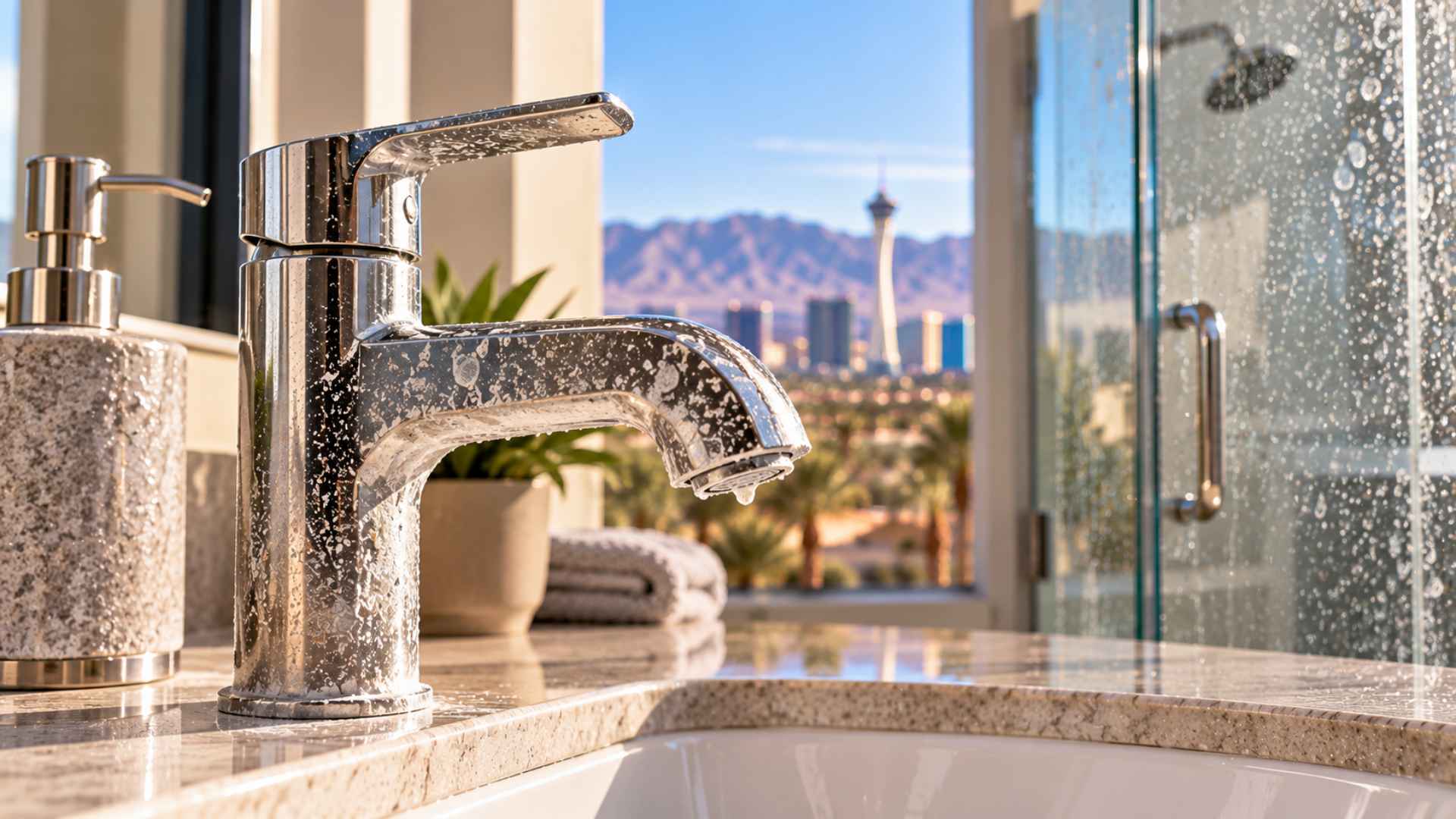
Hard water contains dissolved minerals, primarily calcium and magnesium. Those minerals are not considered a health concern, but they can leave the familiar white or chalky buildup Las Vegas homeowners see around faucets, showerheads, fixtures, and other surfaces.

Inside a traditional water heater, mineral deposits and sediment can also accumulate over time.

That means a water heater serving a home in Las Vegas or Henderson shouldn’t necessarily be treated exactly like one operating in an area with softer water.

How Long Should a Water Heater Last in Las Vegas?

For many conventional tank-style water heaters, 8 to 12 years is a reasonable general lifespan to keep in mind.

But age alone doesn’t tell you whether your water heater is ready for replacement.

A well-maintained unit may continue operating beyond that range. Another water heater may begin developing problems earlier because of heavy use, sediment accumulation, corrosion, installation issues, or lack of maintenance.

If your water heater is approaching the 8- to 10-year mark, it’s a good time to start paying closer attention to its condition rather than waiting for a leak or complete failure.

Sediment Is a Bigger Concern in Southern Nevada

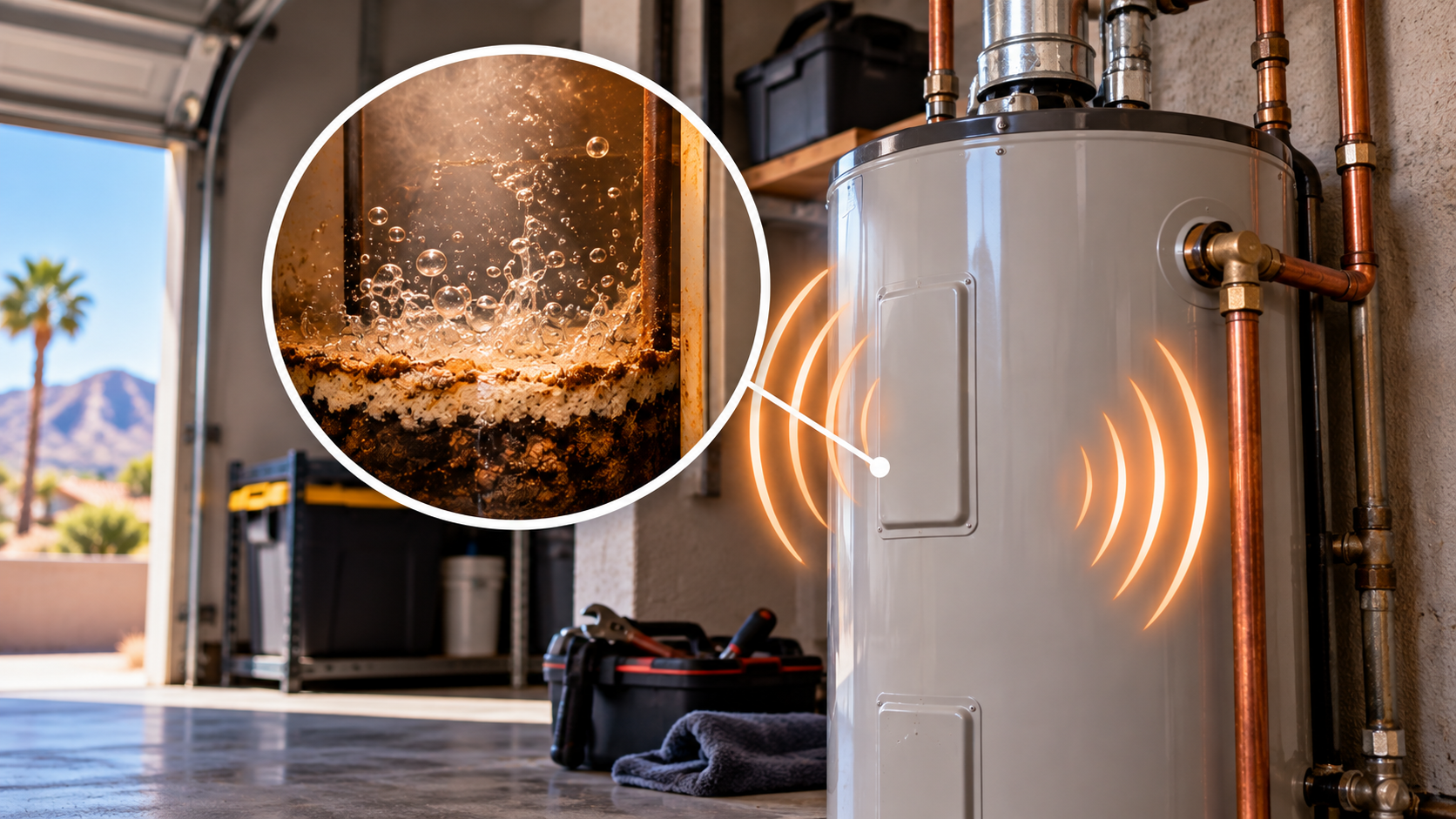
Every time water enters your tank, it brings dissolved minerals with it. As water is heated repeatedly, sediment can collect toward the bottom of the tank.

Over time, excessive accumulation can contribute to problems such as:

* Popping, rumbling, or unusual noises from the tank
* Reduced hot-water performance
* Longer heating times
* Mineral buildup
* Additional stress on water-heater components

This is one reason routine flushing can be particularly useful for homeowners in the Las Vegas Valley.

How Often Should You Flush a Water Heater in Las Vegas?

Because Southern Nevada has very hard water, Pipe Pros generally recommends having a traditional tank water heater flushed about every six months.

Homes with a properly operating, high-performing water softener may sometimes be able to extend that interval to approximately 12 months, depending on the condition of the system and water heater.

The goal isn’t simply to drain water from the tank. Regular service gives you an opportunity to remove accumulated sediment and keep an eye on the overall condition of the water heater.

If you aren’t sure when your water heater was last flushed, checking the age and condition of the unit is a good place to start.

Don’t Forget the Anode Rod

One of the most overlooked parts of a traditional tank water heater is the anode rod.

Think of the anode rod as a sacrificial component. It is designed to corrode so the steel tank doesn’t corrode as quickly. Once that rod is depleted, the tank itself has less protection against corrosion.

That matters because a worn heating element or valve can often be repaired.

A leaking or corroded tank usually means it’s time for a new water heater.

Having the anode rod inspected and replacing it when necessary can therefore be an important part of getting the most useful life from your water heater.

Signs Your Water Heater May Be Nearing the End of Its Life

Age is only one factor. Las Vegas Valley homeowners should also watch for:

Rust or Corrosion

Visible corrosion around fittings, connections, or the tank itself deserves attention.

Water Around the Tank

Don’t ignore unexplained moisture around your water heater. It could be something relatively minor, but it could also indicate the tank is beginning to fail.

Less Hot Water Than You Used to Have

If showers are suddenly getting cold sooner or your household is consistently running out of hot water, the water heater should be inspected.

Popping or Rumbling Sounds

Some noise is normal, but noticeable popping or rumbling can be associated with sediment accumulation inside the tank.

Rust-Colored or Discolored Hot Water

Discoloration coming specifically from the hot-water side can be a reason to have the water heater checked.

Your Water Heater Is 10+ Years Old

A 10-year-old water heater doesn’t automatically need replacement. But if an older unit is showing several of these symptoms, it makes sense to evaluate it before you’re dealing with an unexpected failure.

Does a Water Softener Make a Difference?

A water softener can reduce hardness minerals reaching plumbing fixtures and appliances, which can help reduce scale-related problems.

However, installing a softener doesn’t mean your water heater becomes maintenance-free.

The softener itself needs to be operating and maintained correctly, and the water heater should still be inspected and serviced according to its condition and the manufacturer’s recommendations.

If you recently purchased a home in Summerlin, Green Valley, Anthem, Inspirada, Southern Highlands, Mountains Edge, or another Las Vegas Valley community and aren’t sure whether the existing softener is actually working correctly, that’s worth determining before assuming the water heater is protected.

Water Heater Maintenance Throughout the Las Vegas Valley

Hard water isn’t limited to one Las Vegas ZIP code.

Homes throughout Las Vegas, Henderson, North Las Vegas, Summerlin, Spring Valley, Enterprise, Paradise, Centennial Hills, Skye Canyon, Southern Highlands, Mountains Edge, Silverado Ranch, Green Valley, Anthem, Inspirada, Whitney Ranch, Cadence, and surrounding Southern Nevada communities can experience the effects of our region’s mineral-rich water.

The age of the neighborhood can also matter.

A newer home in Inspirada or Skye Canyon may have a relatively young water heater, while homes in established areas of Las Vegas, Henderson, Green Valley, or Spring Valley may have units that have already been replaced once—or are approaching replacement age now.

If you recently bought a home and don’t know the water heater’s history, check the manufacturer’s label for the model and serial number. That can often help establish the unit’s approximate age.

Should You Replace a Water Heater Before It Fails?

Sometimes.

If your water heater is older but working properly, replacement may not be urgent. But there is a major difference between planning for a water heater replacement and discovering you need one because the tank started leaking.

Consider having an older unit evaluated if:

* It’s around 8–12 years old
* You don’t know its maintenance history
* It has never been flushed
* You’re hearing new noises
* Hot-water performance has declined
* You see corrosion or moisture
* You’re already planning other plumbing work

An inspection can help determine whether routine maintenance still makes sense or whether putting additional money into an aging unit is no longer the best option.

Protect Your Water Heater From Las Vegas Hard Water

You can’t change Southern Nevada’s naturally hard water, but you can stay ahead of what it does inside your plumbing system.

Routine flushing, keeping an eye on the anode rod, maintaining your water softener if you have one, and paying attention to changes in your hot water can help you catch problems before they become bigger ones.

And if you don’t remember the last time your water heater was serviced, that’s probably a good sign it’s time to take a look.

Las Vegas Water Heater Flush & Anode Rod Special

Pipe Pros is currently offering a $59 water heater flush and anode rod service for standard 40- and 50-gallon tank water heaters through October 15, 2026.

The offer is limited to one per household and cannot be combined with other offers.

Pipe Pros serves homeowners throughout the Las Vegas Valley, including Las Vegas, Henderson, North Las Vegas, Summerlin, Spring Valley, Enterprise, Southern Highlands, Mountains Edge, Silverado Ranch, Green Valley, Anthem, Inspirada, Centennial Hills, Skye Canyon, and surrounding communities.

If your water heater hasn’t been serviced recently—or you simply don’t know when it was last maintained—schedule a water heater inspection and flush with Pipe Pros before Southern Nevada’s hard water has more time to leave its mark.

Tank vs. Tankless Water Heaters: Which Is Right for Your Las Vegas Home?


If your water heater is nearing the end of its life, one of the first questions you’ll face is whether to replace it with another traditional tank water heater or upgrade to a tankless system.

There’s no universal “best” option. The right choice depends on your family’s hot water usage, your budget, how long you plan to stay in your home, and something many national articles overlook—Southern Nevada’s extremely hard water. That can affect the lifespan and maintenance needs of either system.

At Pipe Pros Plumbing & Mechanical, we help homeowners throughout Las Vegas make this decision every day. Here’s what you should know before investing in a new water heater.


How Traditional Tank Water Heaters Work


A traditional water heater stores 40 to 50 gallons of hot water in a tank and keeps it heated throughout the day so it’s ready whenever you turn on the faucet.

Advantages

• Lower upfront cost

• Simpler installation

• Reliable technology

• Great choice for many homes

Considerations

• Limited hot water supply

• Uses energy keeping water hot even when you’re not using it

• Typically has a shorter lifespan than a tankless unit

For many homeowners, replacing an existing tank with another tank is still the most cost-effective solution.


How Tankless Water Heaters Work


A tankless water heater heats water only when you need it. Instead of storing hot water, it rapidly heats water as it flows through the unit.

Advantages

• Endless hot water

• Higher energy efficiency

• Compact wall-mounted design

• Longer expected lifespan with proper maintenance

Considerations

• Higher installation cost

• May require gas line or venting upgrades

• Requires periodic descaling, especially in areas with hard water like Las Vegas

Las Vegas Hard Water Changes the Equation

One thing that separates Southern Nevada from many other parts of the country is our hard water.

Minerals naturally found in our water create scale buildup inside both traditional and tankless water heaters. Tank water heaters collect sediment in the bottom of the tank, while tankless systems can develop mineral buildup inside the heat exchanger if they aren’t maintained. Regular flushing or descaling helps extend the life of either system.


Which Water Heater Is Right for Your Home?


A traditional tank may be the better choice if:

• You’re looking for the lowest upfront investment.

• You’re replacing an existing tank system.

• Your household has fairly predictable hot water needs.

• You want a straightforward replacement.

A tankless system may be a better fit if:

• You regularly run out of hot water.

• Your family uses multiple showers or appliances at the same time.

• You plan to stay in your home for many years.

• You want improved energy efficiency and are comfortable with periodic maintenance.

Neither option is automatically better. It’s about choosing the system that fits your home and your priorities.

Frequently Asked Questions

Is a tankless water heater worth the extra cost?

For many homeowners, yes. Tankless systems cost more upfront but can offer lower energy use, a longer service life, and continuous hot water. Whether the investment makes sense depends on your home’s setup and how long you plan to stay there.

Do tankless water heaters work well in Las Vegas?

Yes. They perform well here but should be maintained regularly because our hard water can create mineral buildup inside the heat exchanger.

How long does a traditional water heater last?

Most traditional tank water heaters last around 8 to 12 years, depending on maintenance and local water quality. Tankless units often last 15 to 20 years when properly maintained.

Do tankless water heaters provide instant hot water?

Not exactly. They provide continuous hot water, but you may still wait for hot water to travel through your home’s plumbing.


Final Thoughts

Whether you’re replacing a failing water heater or planning an upgrade, choosing between a traditional tank and a tankless system is an important decision.

Every home is different. The number of people in your household, your hot water usage, your budget, and your home’s plumbing all play a role. If you’re unsure which option makes the most sense, Pipe Pros Plumbing & Mechanical can evaluate your current system and help you choose the solution that’s right for your home.


Two Four Media Disclaimer

Disclaimer: This article was created by Two Four Media for  Pipe Pros Plumbing & Mechanical. While we strive to provide accurate and helpful information, every plumbing system is different. For recommendations specific to your home, schedule an inspection with Pipe Pros Plumbing & Mechanical.

Do You Need a Water Softener in Las Vegas?

If you live in Las Vegas, you’ve probably seen the signs of hard water even if you didn’t realize what was causing them. White buildup around faucets, cloudy shower doors, spots on dishes, stiff laundry, and mineral deposits around plumbing fixtures are all common throughout Southern Nevada.

That’s because Las Vegas has particularly hard water. While hard water is generally safe to use, the high concentration of dissolved minerals can create problems throughout your home.

A water softener can help reduce those problems, but is installing one actually worth it for Las Vegas homeowners?

For many homes, the answer is yes.

Why Is Las Vegas Water So Hard?

Most of the Las Vegas Valley’s drinking water originates from Lake Mead and the Colorado River.

As water travels through the Colorado River system and comes into contact with mineral-rich rock and soil, it picks up naturally occurring minerals, particularly calcium and magnesium.

These dissolved minerals are responsible for what we call water hardness.

Las Vegas water commonly falls into the very hard or extremely hard range. That means every time water moves through your plumbing system, those minerals travel with it.

When the water evaporates or is heated, minerals can remain behind as scale and sediment.

Over months and years, that buildup becomes increasingly noticeable.

What Does a Water Softener Actually Do?

A traditional water softener is designed to reduce the calcium and magnesium responsible for hard water.

Most residential systems accomplish this through a process called ion exchange.

Water passes through a tank containing resin beads that attract hardness minerals. Calcium and magnesium are exchanged for sodium or potassium ions before the softened water continues into the home’s plumbing system.

The result is water containing significantly fewer hardness minerals.

The system periodically regenerates using a brine solution to clean the resin so it can continue removing minerals from incoming water.

7 Signs Your Las Vegas Home Could Benefit From Soft Water

Hard water affects different homes in different ways, but there are several common signs that mineral buildup may be causing problems.

  1. White Buildup Around Faucets

That chalky white material around faucets and fixtures isn’t dirt.

It’s usually mineral scale left behind when hard water evaporates.

You may clean it away only to see it return a few days later.

  1. Spots on Dishes and Glassware

If glasses come out of the dishwasher covered in cloudy spots, hard water may be responsible.

Water evaporates during the drying process while dissolved minerals remain on the surface.

  1. Cloudy Shower Doors

Las Vegas homeowners frequently battle white film and scale on glass shower doors.

Hard water combined with soap can create deposits that become increasingly difficult to remove.

  1. Reduced Water Flow From Faucets and Showerheads

Mineral scale can accumulate inside faucet aerators and showerheads.

Eventually, small openings become partially blocked, reducing water flow or causing water to spray in different directions.

  1. Soap Doesn’t Lather Well

Hardness minerals interact with soap and can make it more difficult to create a good lather.

That can mean using more soap, shampoo, detergent, and cleaning products to accomplish the same job.

  1. Laundry Feels Stiff

Minerals can remain behind in clothing after washing.

Over time, towels may feel less soft and clothing can feel stiff even after being freshly washed.

  1. Scale Around Plumbing Appliances

Hard water doesn’t only leave deposits where you can see them.

Mineral scale can also develop inside appliances and plumbing equipment that regularly use or heat water.

How Hard Water Affects Your Water Heater

Your water heater is one of the appliances most affected by Las Vegas hard water.

Heating water encourages dissolved minerals to separate from the water and form scale or sediment.

In a traditional tank-style water heater, sediment can accumulate at the bottom of the tank. This can interfere with efficient heat transfer and contribute to additional wear on the system.

Tankless water heaters can also develop mineral scale inside their heat exchangers and water passages.

That’s one reason regular water heater maintenance in Las Vegas is so important.

A properly operating water softener can reduce the amount of hardness minerals reaching the water heater and other plumbing equipment.

Can Soft Water Help Plumbing Fixtures Last Longer?

Reducing scale can help protect fixtures and water-using equipment from excessive mineral accumulation.

Think about the white crust that develops around a faucet.

Similar mineral deposits can form in areas you can’t easily see, including valves, fittings, showerheads, appliance connections, and internal plumbing components.

A water softener doesn’t eliminate the need for normal maintenance, but reducing mineral scale can make maintaining your home’s plumbing system easier.

Water Softener vs. Water Filter: What’s the Difference?

Water softeners and water filtration systems are often discussed together, but they perform different jobs.

A water softener primarily addresses hardness minerals such as calcium and magnesium.

A water filtration system is designed to reduce specific contaminants, tastes, odors, sediment, or other substances depending on the type of filter being used.

Some homeowners choose to install both systems because they’re trying to solve different water-quality concerns.

Before choosing equipment, it’s important to understand what problem you’re actually trying to fix.

If your primary complaint is white mineral buildup, scale, spotted dishes, and extremely hard water, a water softener is usually the system designed to address those issues.

Does Soft Water Feel Different?

Yes, and this sometimes surprises homeowners after installing a water softener.

Softened water can feel noticeably different on your skin.

Because soap interacts differently with softened water, you may notice more lather and a slicker feeling while washing your hands or showering.

That doesn’t mean the soap isn’t rinsing away. It’s simply a different experience than washing with mineral-heavy hard water.

Many homeowners also find they can use less soap, shampoo, and laundry detergent after switching to softened water.

Does a Water Softener Require Maintenance?

Yes.

Water softeners aren’t completely maintenance-free.

Traditional systems generally require homeowners to periodically check and replenish the salt or potassium used during regeneration.

The system should also be inspected periodically to ensure it’s operating properly and regenerating as intended.

Maintenance requirements vary depending on the equipment, household water consumption, and hardness of the incoming water.

Because Las Vegas water contains such high mineral concentrations, proper setup and maintenance are particularly important.

Is a Water Softener Worth It in Las Vegas?

Whether a water softener makes sense depends on your home, plumbing system, and personal preferences.

However, Las Vegas is one of the places where homeowners can clearly see the effects of hard water.

If you’re constantly cleaning mineral deposits from faucets, fighting cloudy shower glass, dealing with spotted dishes, or noticing scale around plumbing fixtures, softening the water addresses the source of those problems rather than repeatedly cleaning up the evidence.

It can also reduce the amount of mineral scale reaching your water heater and other water-using equipment.

Get Help With Your Las Vegas Water Quality

Hard water is simply part of living in Southern Nevada, but that doesn’t mean you have to live with mineral buildup throughout your home.

The right water treatment setup can reduce scale, make household cleaning easier, and help protect plumbing fixtures and water-using equipment from excessive mineral accumulation.

Pipe Pros Plumbing & Mechanical can help evaluate your home’s plumbing and water-quality needs and determine which options make sense for your property.

Tired of dealing with Las Vegas hard water? Contact Pipe Pros Plumbing & Mechanical today to learn more about water softener options for your home.

How Often Should You Flush Your Water Heater in Las Vegas?

If you live in the Las Vegas Valley, your home’s water heater deals with some challenging conditions. Between Southern Nevada’s desert climate and notoriously hard municipal water, mineral buildup can put additional stress on water heaters and other plumbing equipment.

Among routine water heater maintenance tasks, flushing the tank is one of the most important for maintaining efficiency and reducing sediment buildup. But how often should you flush your water heater in Las Vegas, and why does our local water make such a difference?

How Often Should You Flush a Water Heater in Las Vegas?

A good rule of thumb for Las Vegas homeowners is to flush a traditional tank-style water heater approximately every six months, particularly in homes without a whole-home water softener or filtration system.

General water heater maintenance recommendations often call for annual flushing. However, Southern Nevada’s extremely hard water can cause mineral sediment to accumulate much faster.

Homes with an effective water softener may be able to follow an annual flushing schedule, although periodic inspections are still a good idea.

Why Las Vegas Hard Water Matters

Most of the Las Vegas Valley’s water supply comes from Lake Mead and the Colorado River. As water moves through mineral-rich rock and soil, it picks up dissolved minerals, particularly calcium and magnesium.

Water hardness is commonly measured in grains per gallon (GPG). For comparison:

  • Slightly hard water: 1.0–3.5 GPG
  • Hard water: 7.0–10.5 GPG
  • Las Vegas water: commonly around 16 GPG or higher, depending on location and conditions

That puts Las Vegas firmly in the very hard to extremely hard water category.

When hard water enters a water heater and is heated, some of those dissolved minerals can precipitate out of the water and settle at the bottom of the tank. Over time, that creates a layer of mineral sediment.

What Does Sediment Do to a Water Heater?

Sediment buildup is more than an inconvenience. Excessive accumulation can reduce efficiency, affect water heater performance, and contribute to premature component wear.

  1. Reduced Heating Efficiency

In a gas tank-style water heater, sediment accumulating at the bottom of the tank can interfere with efficient heat transfer.

The water heater may need to run longer to bring the water to the desired temperature, potentially increasing energy consumption.

  1. Additional Stress on the Tank

Heavy sediment accumulation can create hot spots and additional thermal stress inside a water heater.

Over time, deterioration of the tank’s protective lining can expose the steel underneath to corrosion. Once the tank itself begins leaking because of corrosion, replacement is typically required.

  1. Electric Heating Element Problems

Electric water heaters can also be affected by mineral buildup.

Scale and sediment around the lower heating element can interfere with heat transfer and contribute to premature element failure.

5 Signs Your Water Heater May Need to Be Flushed

If you can’t remember the last time your water heater was serviced, watch for these common warning signs.

  1. Popping, Rumbling, or Crackling Sounds

Water trapped beneath sediment can become extremely hot and create bubbles that move through the mineral deposits.

If your water heater has suddenly become noticeably noisier, sediment may be accumulating inside the tank.

  1. Less Hot Water

Does your shower seem to run cold sooner than it used to?

Heavy sediment can reduce the usable capacity of a tank and interfere with efficient heating.

  1. Cloudy or Discolored Hot Water

Cloudy, yellowish, or brownish hot water can indicate sediment or corrosion somewhere within the water heating or plumbing system.

A professional inspection can help determine the source.

  1. Unusual Hot Water Odors

Metallic or sulfur-like odors coming specifically from your hot water can indicate an issue inside the water heater that should be inspected.

  1. Slow Hot Water Recovery

If your water heater takes noticeably longer to recover after showers or other heavy hot-water use, sediment buildup or a heating component problem may be contributing to the issue.

Tank vs. Tankless Water Heater Maintenance

Tank and tankless water heaters both require maintenance in Las Vegas, but the process is different.

Traditional Tank Water Heaters

Flushing a tank-style water heater typically involves safely shutting down the unit, connecting a hose to the drain valve, and removing water and accumulated sediment from the tank.

The amount of sediment can vary considerably depending on the age of the water heater, water quality, maintenance history, and whether the home has a water softener.

Tankless Water Heaters

Tankless water heaters don’t store dozens of gallons of standing water, but that doesn’t make them immune to Las Vegas hard water.

Mineral scale can accumulate inside the heat exchanger and restrict performance. Periodic descaling circulates a cleaning solution through the system to remove mineral deposits.

In Southern Nevada, regular tankless water heater maintenance is particularly important because of our hard water.

Should You Flush Your Water Heater Yourself?

Water heater flushing can look simple, but older units and heavily scaled Las Vegas water heaters can present complications.

Aging Drain Valves

Some water heaters use plastic drain valves that can become brittle after years of exposure to heat and minerals. A damaged valve can create a leak or make it difficult to properly reseal the tank after flushing.

Sediment Clogs

Large pieces of mineral sediment can clog the drain opening during the flushing process, particularly on tanks that haven’t been maintained regularly.

Hot Water and Pressure

Water heaters contain extremely hot water under pressure. Improperly draining or servicing the system can create a burn or water-damage hazard.

Professional water heater maintenance also provides an opportunity to inspect other important components, including the temperature and pressure relief valve and the condition of the anode rod.

Protect Your Water Heater From Las Vegas Hard Water

Your water heater works every day, and Southern Nevada’s hard water makes regular maintenance especially important.

Routine flushing can help reduce sediment buildup, maintain heating efficiency, extend the useful life of water heater components, and identify developing problems before they become expensive repairs.

If your water heater hasn’t been flushed recently—or you don’t know when it was last serviced—Pipe Pros Plumbing & Mechanical can help.

Need your water heater flushed or inspected? Contact Pipe Pros Plumbing & Mechanical today to schedule water heater service in the Las Vegas Valley.