Check Us Out

Tag: Pipe Pros

Your Plumber Should Be Someone You Can Trust — Not Just Someone Who Shows Up

When something goes wrong with your plumbing, you usually don’t have weeks to research your options. A leaking water heater, clogged drain, broken fixture, or unexpected plumbing problem can quickly turn into something that needs attention now.

That’s also when trust matters most.

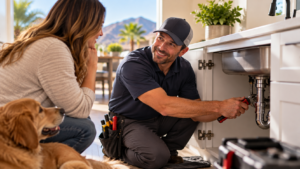
At Pipe Pros, we’re a local, family-owned plumbing company serving Las Vegas, Henderson, and communities throughout Southern Nevada. We live and work in the same area as the customers we serve, and our reputation is built one home and one customer at a time.

Local Means Accountable

There’s a big difference between hiring a company that operates in dozens of markets and choosing a local plumber whose reputation is tied directly to the community.

For a family-owned business, every customer experience matters. The people calling Pipe Pros aren’t simply work orders on a schedule. They’re homeowners, landlords, business owners, neighbors, and people who may need a plumber again years from now.

That creates accountability.

We want customers to know who they’re working with, understand what needs to be done, and feel comfortable with the work being performed in their home.

Plumbing Isn’t One-Size-Fits-All

Southern Nevada presents its own plumbing challenges.

Our desert climate, hard water, mineral buildup, and the demands placed on water heaters and plumbing systems can all affect homes differently than they might in other parts of the country.

A plumber who works in Las Vegas and Henderson every day sees these issues firsthand. Local experience helps us recognize common problems, recommend practical solutions, and understand what homeowners in our area are dealing with.

We Want to Be the Plumber You Call Again

The goal of a family-owned plumbing company shouldn’t be to complete one job and disappear.

We’d rather build a relationship.

Maybe today you need help with a water heater. A year from now, it might be a leak, a fixture replacement, a drain issue, or another plumbing project. When that happens, we want Pipe Pros to already be the name you trust.

That means treating people fairly, communicating clearly, and doing work we’re comfortable putting our family name and reputation behind.

Need a Local Plumber in Las Vegas or Henderson?

Whether you’re dealing with an unexpected plumbing problem or planning an upcoming project, Pipe Pros is here to help.

Choose a local, family-owned plumbing company that knows Southern Nevada and values the customers and communities it serves.

Pipe Pros — local plumbing service for Las Vegas, Henderson, and Southern Nevada.

The Advantage of Having a Local Family Plumber in Southern Nevada

Most homeowners don’t think much about finding a plumber until they suddenly need one.

Then the search begins.

Who can you trust? Who knows the area? Who will give you a straightforward answer? And if something else happens six months from now, will you be able to call the same company again?

That’s where having a trusted local, family-owned plumber can make a difference.

Pipe Pros serves homeowners throughout Las Vegas, Henderson, and Southern Nevada, providing the kind of local plumbing service that’s built around relationships rather than transactions.

We Know Southern Nevada Homes

Plumbing problems can be surprisingly regional.

Las Vegas Valley homeowners deal with extremely hard water, mineral deposits, demanding summer conditions, and plumbing systems ranging from decades-old homes to brand-new construction.

Homes in established Las Vegas neighborhoods can have very different plumbing needs than newer developments throughout Henderson and the surrounding valley.

Working locally gives Pipe Pros experience with the types of problems Southern Nevada homeowners encounter every day.

You’re Supporting a Business That Lives Here Too

When you hire a locally owned company, more of that relationship stays within your community.

Our customers shop at the same stores, drive the same roads, live in the same neighborhoods, and recommend businesses to the same friends and family we do.

For Pipe Pros, maintaining a good reputation in Las Vegas and Henderson isn’t a corporate marketing objective. It’s personal.

Our business grows when customers are happy enough with their experience to call us again or tell someone else about us.

Familiarity Matters When Something Goes Wrong

Finding a plumber during an emergency is stressful.

Having a company you’ve already worked with is different.

You know who you’re calling. They may already know your home, your plumbing system, and work that has previously been performed. Instead of starting from scratch every time something happens, you have an established local resource.

That’s one of the biggest benefits of building a relationship with a family-owned plumber.

Straightforward Service. Long-Term Relationships.

We believe good plumbing service should be pretty simple: show up, communicate clearly, understand the problem, explain the options, and do quality work.

No complicated corporate experience required.

Pipe Pros is proud to be a local, family-owned plumbing company serving Las Vegas, Henderson, and Southern Nevada.

Whether you need help today or simply want a plumber you know you can call when the time comes, we’re here.

Pipe Pros — your local Southern Nevada plumbing team.

Sewer Smell in Your Las Vegas Home? Here’s What Could Be Causing It

A sewer-like smell inside your home is hard to ignore—and you shouldn’t have to live with it.

Sometimes the source is surprisingly simple, such as a dry drain in a guest bathroom that hasn’t been used in months. Other times, persistent sewer odors can point to a plumbing problem that deserves professional attention.

For homeowners throughout Las Vegas, Summerlin, Spring Valley, Enterprise, Mountains Edge, Southern Highlands, Centennial Hills, and the surrounding valley, here are some of the common places to start looking when an unpleasant drain or sewer smell appears indoors.

Start With the Room Where You Notice the Smell

Before assuming there’s a major sewer-line problem, try to narrow down where the odor is strongest.

Is it coming from:

  • A bathroom sink?
  • The shower or tub?
  • A floor drain?
  • The kitchen?
  • A laundry room?
  • Around the base of a toilet?
  • Several drains throughout the house?

A smell isolated to one drain is a different situation from an odor appearing throughout multiple rooms.

Also pay attention to when it happens. An odor that appears after using a particular fixture can provide a useful clue.

A Dry P-Trap Is One of the Simplest Possibilities

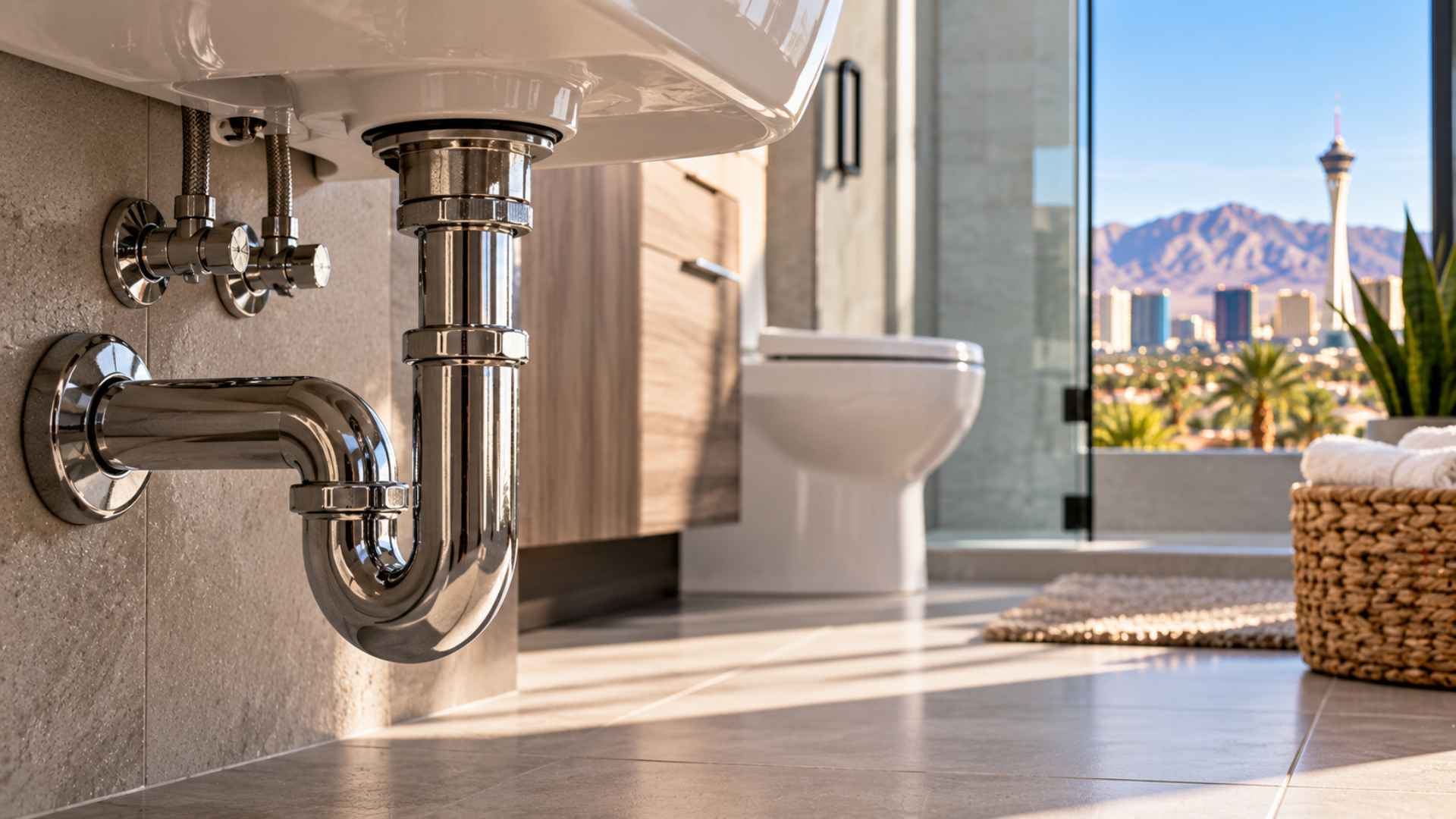
Under many sinks and other plumbing fixtures is a curved section of pipe called a P-trap.

Its job isn’t only to move wastewater. The trap is designed to hold a small amount of water that creates a barrier between your home and gases in the drainage system.

If that water evaporates, the barrier disappears.

This can happen in fixtures that aren’t used very often, including:

  • Guest bathrooms
  • Spare showers
  • Floor drains
  • Utility sinks
  • Seasonal or rarely used areas of the home

In Las Vegas, where our climate is exceptionally dry, evaporation is something homeowners are already accustomed to dealing with.

If an unused drain starts smelling, a dry trap is one possibility worth considering.

Drain Buildup Can Smell Like a Sewer Problem

Not every bad smell coming from a drain is actually sewer gas.

Bathroom and kitchen drains collect all kinds of material.

Hair, soap residue, skin products, food particles, grease, and other organic material can accumulate inside the drain. As that material sits, it can develop an unpleasant odor.

You may notice the smell becoming stronger when water runs through the drain.

If the odor is isolated to one sink or shower, buildup near that particular drain may be involved.

Recurring odors combined with slow drainage can also indicate that the line needs more attention than simple surface cleaning.

Check Around the Toilet

If the smell is strongest near a toilet, the source may not be the drain you initially suspected.

Toilets are sealed to the drainage system at the floor. If that seal is compromised, odors can potentially escape around the base.

Other warning signs can include:

  • A toilet that rocks or moves
  • Moisture around the base
  • Staining near the floor
  • An odor concentrated around the toilet
  • Signs that the toilet isn’t securely seated

A toilet shouldn’t move when you sit on it.

If it does—or if you notice moisture along with the odor—have the installation checked.

Plumbing Vents Play an Important Role

Your home’s drainage system also needs air.

Plumbing vent pipes allow gases to exit the drainage system and help wastewater move properly through the pipes.

Problems involving the venting system can sometimes contribute to drainage symptoms or odors inside the home.

You may notice other signs at the same time, such as:

  • Gurgling drains
  • Toilets bubbling
  • Slow drainage
  • Water levels changing in traps
  • Odors appearing at multiple fixtures

Venting problems aren’t something most homeowners can diagnose simply by looking down a drain.

If several fixtures are behaving strangely at the same time, it’s worth having the larger plumbing system evaluated.

A Sewer-Line Problem Can Affect Multiple Drains

One smelly bathroom sink doesn’t automatically mean you have a sewer-line problem.

Several plumbing symptoms occurring together are more concerning.

Pay attention if sewer odors are accompanied by:

  • Multiple slow drains
  • Repeated backups
  • Toilets that gurgle
  • Water backing up into a shower or tub
  • Problems at the lowest drains in the house
  • Recurring clogs
  • Sewage appearing where it shouldn’t

These symptoms can indicate a problem farther down the drainage system rather than an isolated fixture.

At that point, repeatedly treating individual drains isn’t addressing the underlying issue.

Older Las Vegas Homes Can Have Different Plumbing Concerns

Southern Nevada is known for rapid growth, but not every Las Vegas neighborhood is new construction.

Established areas around central Las Vegas, Downtown, Charleston, Paradise, and older sections of the valley may have plumbing systems that have been in service for decades.

Age alone doesn’t mean there’s a sewer problem.

However, older drain and sewer lines can experience deterioration, shifting, root intrusion, damaged connections, or other conditions that may require inspection.

If you’ve purchased an older Las Vegas home and are experiencing recurring drain problems or persistent sewer odors, the condition of the drainage system may be worth investigating.

Tree Roots Can Create Problems Underground

It might seem strange to talk about tree roots in the desert, but Las Vegas has plenty of mature landscaping.

Roots naturally seek sources of moisture. If a sewer line has an opening, damaged joint, or crack, roots may find their way inside.

Once established, they can catch debris and restrict wastewater flow.

The homeowner may initially notice occasional slow drains or clogs before the problem becomes more significant.

Clearing a blockage may restore flow, but if damaged piping or root intrusion is responsible, identifying the underlying cause matters.

Don’t Just Cover Up a Persistent Sewer Smell

Air freshener may make the bathroom smell better temporarily, but it doesn’t tell you why the odor is there.

The same applies to repeatedly pouring products down the drain without knowing what’s causing the problem.

If an odor disappears after addressing an obvious dry drain and doesn’t return, the explanation may have been simple.

If it keeps coming back, spreads to other fixtures, or appears alongside drainage problems, it’s time to look deeper.

When Should You Call a Plumber About Sewer Odors?

Consider having your plumbing checked if:

  • The sewer smell keeps returning
  • Several drains smell at the same time
  • Drains are also slow or backing up
  • Toilets or drains are gurgling
  • The smell is strongest around the base of a toilet
  • You notice unexplained moisture
  • Adding water to an unused drain doesn’t resolve the problem
  • You suspect a sewer-line or venting issue

The important thing is identifying whether you’re dealing with one fixture or a problem affecting the larger drainage system.

Sewer or Drain Smells in Your Las Vegas Home?

From older neighborhoods near central Las Vegas to homes in Summerlin, Spring Valley, Enterprise, Mountains Edge, Southern Highlands, and Centennial Hills, plumbing systems can develop odors for many different reasons.

Pipe Pros can help identify whether the source is a drain, fixture, toilet, plumbing vent, or a problem farther down the drainage system.

Rather than repeatedly masking the smell, find out what’s causing it.

If you’re dealing with persistent sewer or drain odors, contact Pipe Pros for professional plumbing and drain service in Las Vegas and throughout Southern Nevada.


Disclaimer: This article was created by Two Four Media for general informational purposes only and is not intended as professional plumbing advice. Plumbing systems and situations can vary. For questions about your specific plumbing needs, diagnosis, repairs, or service, please contact Pipe Pros directly.
Las Vegas Hard Water: What Those White Spots Are Telling You

White spots on your faucets. Chalky residue around the showerhead. Cloudy marks on glass shower doors that seem to come back as soon as you clean them.

If you live in Las Vegas, you’re probably familiar with all of them.

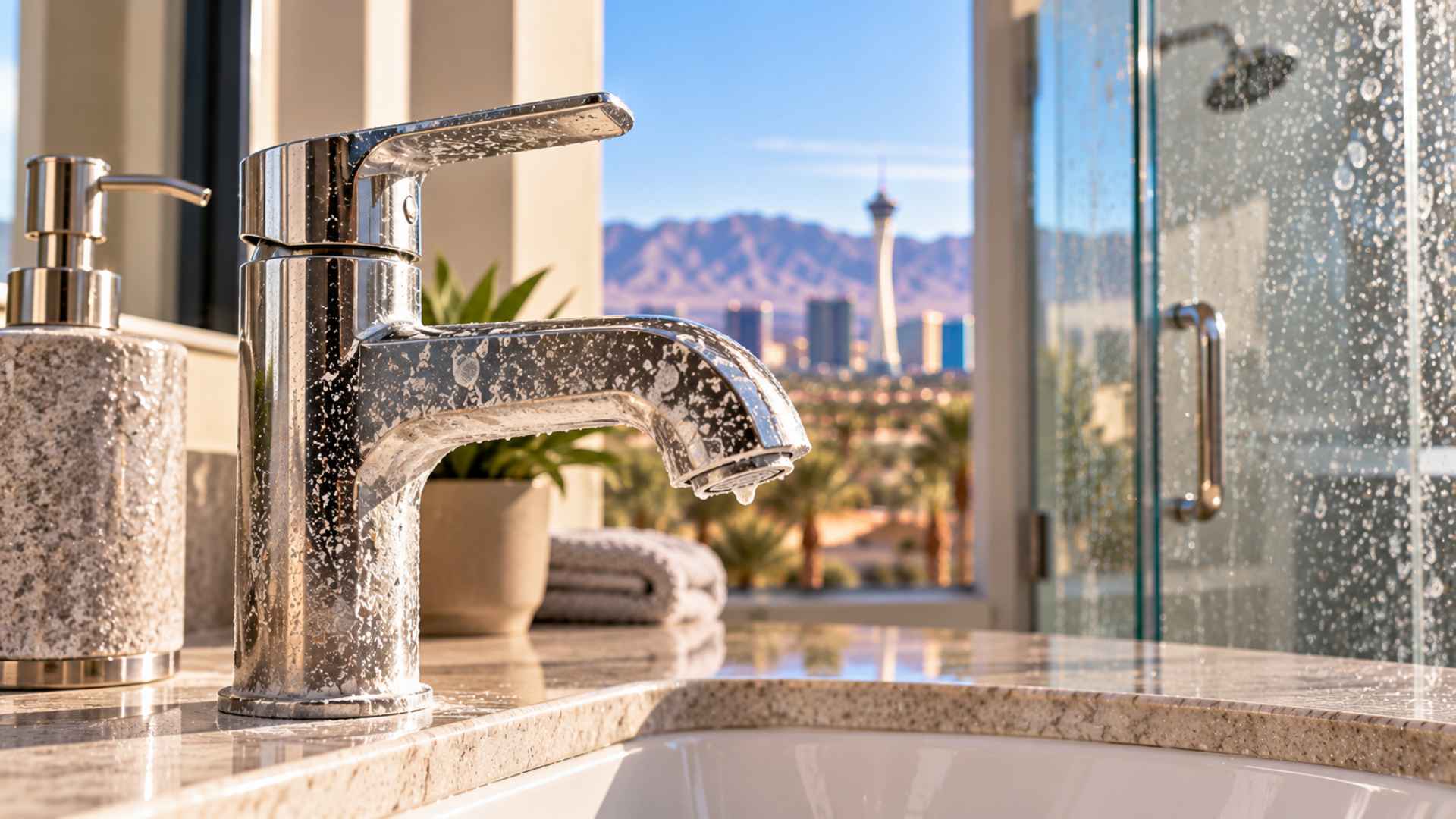
Those stubborn white deposits are one of the most visible signs of Southern Nevada’s hard water. The minerals naturally present in our water can leave residue behind as water evaporates, creating buildup on everything from bathroom fixtures to kitchen faucets.

But the spots you can see are only part of the story. The same minerals can also accumulate in plumbing fixtures, water heaters and water-using appliances over time.

Here’s what Las Vegas homeowners should know about hard water and what can realistically be done about it.

Las Vegas Has Very Hard Water

Hard water contains dissolved minerals, primarily calcium and magnesium.

The Las Vegas Valley’s water supply is considered very hard, which is why mineral deposits are such a common sight in homes throughout Southern Nevada.

Whether you’re in Summerlin, Spring Valley, Enterprise, Centennial Hills, Mountains Edge, Southern Highlands or another part of the Las Vegas Valley, you’re likely dealing with the effects of mineral-rich water.

Hard water isn’t unusual, but the degree of hardness in Southern Nevada makes its effects especially noticeable.

Those White Spots Are Mineral Deposits

When water lands on a faucet, shower door, countertop or sink and then evaporates, the water disappears but some of its dissolved minerals remain.

That’s what creates the familiar white or chalky residue.

You may notice buildup around:

  • Faucet aerators
  • Showerheads
  • Sink drains
  • Glass shower doors
  • Bathtub fixtures
  • Kitchen faucets
  • Tile and grout
  • Appliances that use water

Repeated exposure allows those deposits to accumulate.

That’s why simply wiping away a water spot doesn’t prevent another one from appearing the next time the surface gets wet and dries.

Your Showerhead Can Slowly Lose Performance

Mineral buildup isn’t only cosmetic.

Look closely at a showerhead in a Las Vegas home and you may see white deposits forming around individual spray openings.

As those openings become restricted, the spray pattern can change. Some openings may stop flowing properly while others spray in different directions.

The result can feel like a water-pressure problem even though the home’s actual water pressure hasn’t changed.

Faucet aerators can experience the same issue.

If one faucet or shower has noticeably weaker flow than the rest of the house, checking for mineral buildup at the fixture is a reasonable place to start.

Hard Water and Your Water Heater

Your water heater handles a lot more water than your bathroom faucet.

In a traditional tank-style water heater, minerals and sediment can accumulate toward the bottom of the tank over time.

As buildup increases, homeowners may begin noticing symptoms such as popping or rumbling noises while the water heater operates.

Routine maintenance can be particularly important in Southern Nevada because of our hard-water conditions.

If your water heater hasn’t been inspected or maintained in years, the lack of visible problems on the outside doesn’t necessarily tell you what’s accumulating inside.

Appliances Deal With Hard Water Too

Any appliance regularly using water may be exposed to mineral buildup.

That can include:

  • Dishwashers
  • Washing machines
  • Refrigerators with water dispensers
  • Ice makers
  • Coffee makers
  • Tank and tankless water heaters

You may notice spotting on dishes and glassware, deposits around appliance connections or mineral residue in areas where water regularly evaporates.

The effect will vary depending on the appliance, household usage and whether the home has any type of water treatment.

Hard Water Can Make Cleaning Frustrating

This is probably the effect homeowners notice most often.

You clean the shower glass until it’s spotless. A few showers later, the cloudy appearance starts coming back.

You polish the faucet. Soon afterward, white deposits begin forming around the base again.

That’s because cleaning removes the deposits already on the surface. It doesn’t change the mineral content of the water creating them.

Regular cleaning can keep buildup under control, but homeowners dealing with significant hard water may find themselves repeating the process constantly.

Is Hard Water the Same as Contaminated Water?

No.

Water hardness describes the concentration of certain dissolved minerals in the water. It isn’t the same thing as saying the water is contaminated or unsafe.

That’s an important distinction.

The frustration with hard water is generally related to scale, mineral deposits, cleaning, fixture performance and its effects on plumbing equipment—not simply the presence of visible white residue.

Can a Water Softener Help?

A properly sized and operating water softener can reduce the hardness minerals reaching the home’s plumbing and fixtures.

Instead of simply removing spots after they appear, a softener addresses the minerals responsible for much of the scale in the first place.

For Las Vegas homeowners tired of constantly cleaning fixtures and dealing with hard-water buildup, that’s one reason whole-home water softening is worth considering.

However, not every water-treatment system does the same thing.

Water Softening and Water Filtration Aren’t the Same Thing

These terms are often used interchangeably, but they’re not necessarily the same.

A traditional water softener is designed specifically to address hardness minerals such as calcium and magnesium.

Water filtration systems may be designed to address other characteristics of the home’s water.

Depending on what a homeowner wants to accomplish, one system or a combination of treatment methods may make sense.

Before buying equipment based on advertising alone, it’s worth understanding the actual problem you’re trying to solve.

If the problem is primarily scale and hard-water buildup, make sure the system you’re considering is actually designed to address hardness.

What Can You Do Without Installing a Water Softener?

Not every homeowner is ready to install a whole-home system.

Regularly cleaning faucets, showerheads and aerators can help keep visible mineral buildup under control. Removing deposits before they become severe can also help maintain normal flow through fixtures.

Water heaters should receive appropriate maintenance based on their type, condition and manufacturer recommendations.

But these steps manage the effects of hard water. They don’t change the hardness of the water entering the home.

If mineral buildup is a constant problem throughout the house, water treatment may be worth discussing.

Already Have a Water Softener but Still Seeing White Buildup?

Having a water softener installed doesn’t guarantee it’s operating correctly forever.

If you’ve noticed hard-water symptoms returning, the system may need attention.

Changes worth noticing include:

  • White scale returning rapidly
  • Soap behaving differently
  • Increased spotting on glassware
  • Mineral buildup around fixtures
  • Changes in how the water feels
  • Unexpected changes in salt usage

The issue could involve settings, maintenance, equipment condition or another part of the system.

Rather than assuming the softener is working because it’s plugged in and has salt, its actual operation may need to be checked.

Hard Water Is Part of Owning a Home in Southern Nevada

From older homes in central Las Vegas and Spring Valley to newer communities in Summerlin, Enterprise and the southwest valley, hard water is something homeowners throughout the area encounter.

Those white spots aren’t mysterious. They’re visible evidence of minerals left behind after the water evaporates.

Cleaning can address what you see. Proper plumbing maintenance can help manage buildup in fixtures and equipment. And for homeowners who want to address hardness throughout the house, a properly selected water-treatment system may provide a longer-term solution.

Need Help With Hard Water or Mineral Buildup in Las Vegas?

If mineral buildup is affecting your faucets, showerheads, water heater or other plumbing equipment, Pipe Pros can help evaluate what’s happening and discuss options appropriate for your home.

Pipe Pros serves homeowners throughout Las Vegas and Southern Nevada with professional plumbing, water heater and water-treatment services.

Contact Pipe Pros to discuss hard water, mineral buildup or water-treatment options for your Las Vegas home


Disclaimer: This article was created by Two Four Media for general informational purposes only and is not intended as professional plumbing advice. Plumbing systems and situations can vary. For questions about your specific plumbing needs, diagnosis, repairs, or service, please contact Pipe Pros directly.

Waiting Too Long for Hot Water? What Las Vegas Homeowners Should Know

Standing in the bathroom with the shower running for a minute or two before the water finally gets hot is more than an inconvenience. You’re also sending perfectly good water down the drain while you wait.

It’s a common complaint in homes throughout Las Vegas and Southern Nevada, particularly in larger houses where the water heater may be a considerable distance from the primary bathroom.

Sometimes that delay is simply a result of the home’s plumbing layout. Other times, slower hot-water delivery can point to a water heater that needs attention, mineral buildup, or another plumbing issue.

Here’s how to tell the difference.

The Distance From Your Water Heater Matters

Hot water doesn’t instantly appear at the shower when you turn the handle.

When nobody has used hot water for a while, the water sitting in the pipes between the water heater and shower cools. When you turn on the shower, all of that cooler water has to leave the pipe before freshly heated water arrives.

The longer the plumbing run, the longer that can take.

This can be particularly noticeable in larger homes in communities like Summerlin, Southern Highlands, Mountains Edge, and the southwest Las Vegas Valley, where the water heater and primary bathroom may be located on opposite sides of the house.

In that situation, there may be nothing wrong with the water heater itself.

Your Plumbing May Travel Farther Than You Think

The distance you can see between two rooms isn’t necessarily the distance water has to travel.

Water lines may route through walls, ceilings, floors, and other parts of the structure before reaching a fixture. A bathroom that appears relatively close to the garage could still be connected by a surprisingly long plumbing run.

Pipe size and the design of the plumbing system also affect how much cooled water needs to move before hot water reaches the shower.

That’s one reason two similarly sized Las Vegas homes can have completely different experiences with hot-water delivery.

Test More Than One Faucet

Before blaming the water heater, do a quick comparison around the house.

Check the hot water at:

* The kitchen sink
* Bathroom sinks
* Other showers
* Bathtubs

If the kitchen gets hot quickly but the primary bathroom takes much longer, distance or the plumbing serving that part of the home may be the issue.

If hot water is slow or inadequate everywhere, it’s more reasonable to look at the water heater itself.

Also pay attention to whether the water eventually becomes fully hot. Water that takes a while to arrive is a different problem from water that never reaches the temperature it used to.

Your Water Heater May Be Losing Performance

Hot-water problems can become more noticeable as a water heater ages or develops maintenance issues.

Signs that the water heater itself may need attention include:

* Hot water running out sooner than it used to
* Water not getting as hot as before
* Inconsistent hot-water temperatures
* Longer recovery times after showers or laundry
* Popping or rumbling noises from the tank
* Visible corrosion or moisture around the unit

A sudden change is particularly worth investigating.

If your primary shower has taken 90 seconds to get hot since the day you moved in, the home’s plumbing layout may simply be responsible. If it used to take 30 seconds and now takes several minutes, something has changed.

Southern Nevada Hard Water Can Affect Water Heaters

Las Vegas homeowners are very familiar with hard water.

The same minerals that leave white deposits around faucets and showerheads can accumulate inside a traditional tank-style water heater.

Over time, sediment can collect near the bottom of the tank and potentially affect its performance. Heavy buildup may also contribute to the popping and rumbling noises sometimes heard while a water heater is operating.

Routine maintenance can be especially important for water heaters operating with Southern Nevada’s mineral-heavy water.

If your water heater hasn’t been serviced in a long time and its performance is declining, its condition is worth evaluating.

Hot-Water Recirculation May Be an Option

If your water heater works properly but certain fixtures are simply too far away, a hot-water recirculation system may offer another solution.

A recirculation system is designed to reduce the amount of time you spend waiting for heated water to reach distant fixtures.

There are different ways these systems can be configured depending on the home’s plumbing. Some can operate on schedules, controls, or other methods intended to provide faster access to hot water without continuously circulating it.

For a larger Las Vegas home with long plumbing runs, it’s an option worth discussing with a plumber.

Tankless Doesn’t Automatically Mean Instant

It’s easy to assume a tankless water heater will immediately solve a long wait for hot water.

That’s not necessarily true.

Tankless water heaters heat water differently from traditional storage tanks, but the heated water still has to travel from the unit through your home’s plumbing to the shower.

If the water heater is 60 feet of plumbing away from the primary bathroom, replacing a tank with a tankless unit in the same location doesn’t eliminate those 60 feet.

A tankless system may offer other advantages for the right household, but “tankless” and “instant hot water at the shower” aren’t the same thing.

That’s an important distinction when deciding what problem you’re actually trying to solve.

All That Waiting Also Wastes Water

There’s another reason this matters in Las Vegas.

If you run the shower waiting for hot water, everything coming out before it gets hot is going straight down the drain.

Multiply that by multiple showers, sinks, household members, and 365 days a year, and a long hot-water wait can represent a meaningful amount of unused water.

In Southern Nevada, reducing unnecessary water use is worth considering alongside the convenience of getting hot water faster.

When a Slow Shower Deserves a Closer Look

You don’t necessarily need a plumber because one distant bathroom has always taken a little longer to get hot.

It’s more important to investigate when something changes.

Consider having your plumbing or water heater checked if:

* Hot water suddenly takes much longer to arrive
* Water never gets as hot as it once did
* Hot water runs out significantly faster
* Only one shower has a temperature problem
* The water heater has started making unusual noises
* You see moisture or corrosion around the water heater
* Hot-water performance has gradually declined
* You want to explore a hot-water recirculation system

The goal isn’t simply to make the water hotter. It’s to determine what’s causing the delay in the first place.

Faster Hot Water for Las Vegas Homes

From established homes in Spring Valley to larger properties in Summerlin, Enterprise, Mountains Edge, and Southern Highlands, plumbing layouts vary considerably throughout the Las Vegas Valley.

If you’re tired of running the shower and waiting for hot water every morning, Pipe Pros can evaluate your water heater and plumbing system and help identify the reason for the delay.

Depending on the home, the answer could involve water heater maintenance, a repair, a fixture issue, a recirculation solution, or simply finding a better way to work with the home’s existing plumbing design.

Contact Pipe Pros for professional water heater and plumbing service in Las Vegas and throughout Southern Nevada.


Disclaimer: This article was created by Two Four Media for general informational purposes only and is not intended as professional plumbing advice. Plumbing systems and situations can vary. For questions about your specific plumbing needs, diagnosis, repairs, or service, please contact Pipe Pros directly.

Why Is My Water Bill Suddenly So High in Las Vegas?


Opening your water bill and seeing a number that’s dramatically higher than usual can be a nasty surprise—especially when you don’t think your household is using any more water than normal.

For homeowners in Las Vegas and across Southern Nevada, a sudden increase in water usage can have several explanations. Sometimes it’s seasonal outdoor watering. Other times, a running toilet, irrigation problem, hidden plumbing leak, or even a leak beneath the home’s slab may be quietly using water around the clock.

If your Las Vegas water bill suddenly jumped, here are some of the first things worth investigating.

1. Start by Comparing Your Actual Water Usage

Before assuming you have a plumbing problem, compare your current water usage with previous billing periods.

The Las Vegas Valley Water District uses a tiered residential rate structure, meaning the amount charged per 1,000 gallons can increase as consumption rises. Some high-use households may also incur an excessive-use charge when consumption exceeds seasonal thresholds.

That means a significant increase in water consumption can sometimes have an even larger impact on the final bill.

Look at how many gallons you’re actually using rather than comparing only the dollar amount.

If your consumption has suddenly increased without an obvious explanation, it’s time to start looking for where that water is going.

2. A Running Toilet Can Waste Water Without Getting Much Attention

One of the first places to check is the toilet.

A toilet doesn’t have to be visibly overflowing to waste water. A worn flapper, malfunctioning fill valve, incorrect water level, or other internal problem can allow water to continuously move through the tank.

Because the toilet may otherwise appear to work normally, this can continue unnoticed.

Walk through your home and listen to each toilet. If you hear water running or a toilet periodically refilling when nobody has used it, it deserves a closer look.

This is particularly easy to overlook in guest bathrooms that aren’t used very often.

3. Check for Hidden Plumbing Leaks

Not every plumbing leak leaves a puddle on the floor.

Water lines run through walls, ceilings, cabinets, and other concealed areas. Depending on the construction of the home, some plumbing may also run beneath the concrete slab.

Watch for warning signs such as:

* Damp or discolored drywall
* Moisture inside cabinets
* Warped baseboards or flooring
* Unexplained musty odors
* Sounds of running water
* Warm areas on the floor
* Unexplained drops in water pressure
* Water appearing where it shouldn’t

A hidden leak may continue using water 24 hours a day, which can add up quickly.

4. Don’t Forget About Slab Leaks

Many homes throughout the Las Vegas Valley are built on concrete slab foundations.

If a water line beneath the slab develops a leak, you may not immediately see water. Instead, the first clue could be an unusually high water bill.

Other potential warning signs can include warm flooring, unexplained moisture, sounds of running water, or changes in water pressure.

Whether you live in an established Las Vegas neighborhood or a newer community in Summerlin, Centennial Hills, Spring Valley, or the southwest valley, unexplained continuous water usage is worth investigating.

Finding the source of a hidden leak is much better than waiting for it to become visible.

5. Your Irrigation System Could Be the Culprit

In Las Vegas, some of the biggest water users are outside the house.

A broken irrigation line, leaking valve, damaged emitter, incorrectly programmed irrigation controller, or malfunctioning sprinkler system can use a surprising amount of water.

Because many irrigation systems operate early in the morning, homeowners may never actually see them running.

Walk around your property and look for:

* Unusually wet areas
* Water pooling near landscaping
* Broken sprinkler heads
* Dripping irrigation components
* Water running into the street
* Areas of unusually rapid plant growth
* Irrigation running when it shouldn’t

This is particularly important during the hotter months when outdoor water usage naturally increases.

6. Seasonal Watering Can Increase Las Vegas Water Bills

A higher bill doesn’t always mean something is broken.

Southern Nevada’s extreme summer temperatures can significantly change outdoor water demand. Landscaping that requires additional watering can push household consumption higher than it was during cooler months.

Swimming pools can also contribute through evaporation and automatic refill systems.

If your bill increases during summer, compare the current period with the same time last year rather than comparing July or August usage with winter consumption.

The important question is whether the increase makes sense for your household and property.

7. Check Your Pool and Automatic Fill System

If you have a swimming pool, don’t overlook it.

Las Vegas heat and low humidity contribute to evaporation, but unusually high water usage around a pool may indicate something beyond normal evaporation.

A pool leak or malfunctioning automatic fill valve can continuously add water without attracting much attention.

Homeowners in communities with a high concentration of backyard pools—such as Summerlin, Southern Highlands, Mountains Edge, and neighborhoods throughout the southwest Las Vegas Valley—should include the pool when investigating unexplained water consumption.

If the autofill seems to be running constantly, determine why.

8. Check Your Water Softener

Hard water is common throughout Southern Nevada, which means many Las Vegas homes use water softeners or other water-treatment equipment.

A malfunctioning water softener can potentially use more water than expected if it regenerates too frequently or develops another operational problem.

If you’ve noticed unusual water usage along with changes in the way your softener operates, have the system checked.

The same applies to other equipment connected to your home’s water supply.

9. Use Your Water Meter to Look for Continuous Usage

Your water meter can provide an important clue.

First, make sure nobody is using water. Turn off faucets, showers, washing machines, dishwashers, irrigation, and other water-using equipment.

Then check the meter.

If it continues registering water usage when everything should be off, water may be flowing somewhere on the property.

That doesn’t tell you exactly where the problem is, but it can help establish that there’s something worth investigating.

10. The Leak Could Be Between the Meter and Your House

There is another section of plumbing homeowners sometimes forget about: the water service line running from the meter toward the house.

A leak in an underground service line may not produce obvious indoor symptoms.

You might notice unusually damp soil, an unexplained wet area, or water usage on the meter even though everything inside the house is turned off.

In Southern Nevada’s dry climate, an area of consistently wet ground without an obvious irrigation source deserves attention.

Why Did My Water Bill Increase So Much From One Leak?

Small leaks can become expensive because they don’t take breaks.

A faucet you use for five minutes is consuming water for five minutes.

A hidden leak can potentially run 24 hours a day for weeks before the next water bill arrives.

That’s why even a leak that doesn’t appear dramatic can result in a noticeable increase in monthly consumption.

The Las Vegas Valley Water District also uses tiered pricing, so increased consumption may move some of that usage into higher-priced tiers.

Can the Las Vegas Valley Water District Alert Me About a Leak?

Depending on your water provider and meter, usage-monitoring tools may be available.

Las Vegas Valley Water District customers can monitor water usage through their online account. The district also uses advanced metering technology that can identify unusually high or continuous water usage and provide alerts when current contact information is available.

These tools can be useful because unusual consumption may appear before you see physical evidence of a leak.

What If a Leak Caused My High Water Bill?

Don’t throw the bill away after getting the leak repaired.

Las Vegas Valley Water District customers who experience unusually high bills because of qualifying leaks may be eligible for assistance or an adjustment after repairs are completed.

Keep documentation and paid invoices associated with the repair in case they’re needed.

Eligibility and programs can change, so homeowners should check directly with their water provider for current requirements.

When Should You Call a Plumber About a High Water Bill?

A higher bill caused by additional summer landscaping isn’t necessarily a plumbing emergency.

A sudden increase you can’t explain is different.

Consider calling a plumber if:

* Your water usage increased dramatically without a lifestyle change
* The meter shows usage when everything is turned off
* You hear running water when no fixtures are being used
* A toilet continuously runs or refills
* You notice unexplained moisture inside your home
* You suspect a slab or underground plumbing leak
* Water pressure has changed unexpectedly
* You can’t determine where the additional water is going

Finding the source early can help limit wasted water and potentially prevent additional damage.

High Water Bill in Las Vegas? Pipe Pros Can Help Find the Cause

Whether you’re in Summerlin, Spring Valley, Centennial Hills, Enterprise, Southern Highlands, Mountains Edge, or another neighborhood in the Las Vegas Valley, a water bill that suddenly jumps without explanation is worth investigating.

Pipe Pros can help homeowners identify plumbing problems that may be contributing to unexpected water usage, from running fixtures and hidden leaks to more difficult-to-find plumbing issues.

Instead of waiting for another expensive bill, find out where the water is going.

If your Las Vegas water bill suddenly increased and you suspect a plumbing leak, contact Pipe Pros for professional plumbing and leak detection services in Southern Nevada.


Disclaimer: This article was created by Two Four Media for general informational purposes only and is not intended as professional plumbing advice. Plumbing systems and situations can vary. For questions about your specific plumbing needs, diagnosis, repairs, or service, please contact Pipe Pros directly.

Why Does My Water Heater Make Popping or Rumbling Noises?

Your water heater probably isn’t completely silent. You may occasionally hear water moving, the burner operating, or the system cycling as it heats your water.

But loud popping, cracking, knocking, or rumbling sounds are different.

For homeowners in Las Vegas and throughout Southern Nevada, one of the most common things to consider when a traditional tank water heater starts making unusual noises is sediment and mineral buildup.

Our area’s very hard water can make water heater maintenance particularly important. Here’s what those noises may be telling you.

Why Is My Water Heater Making a Popping Noise?

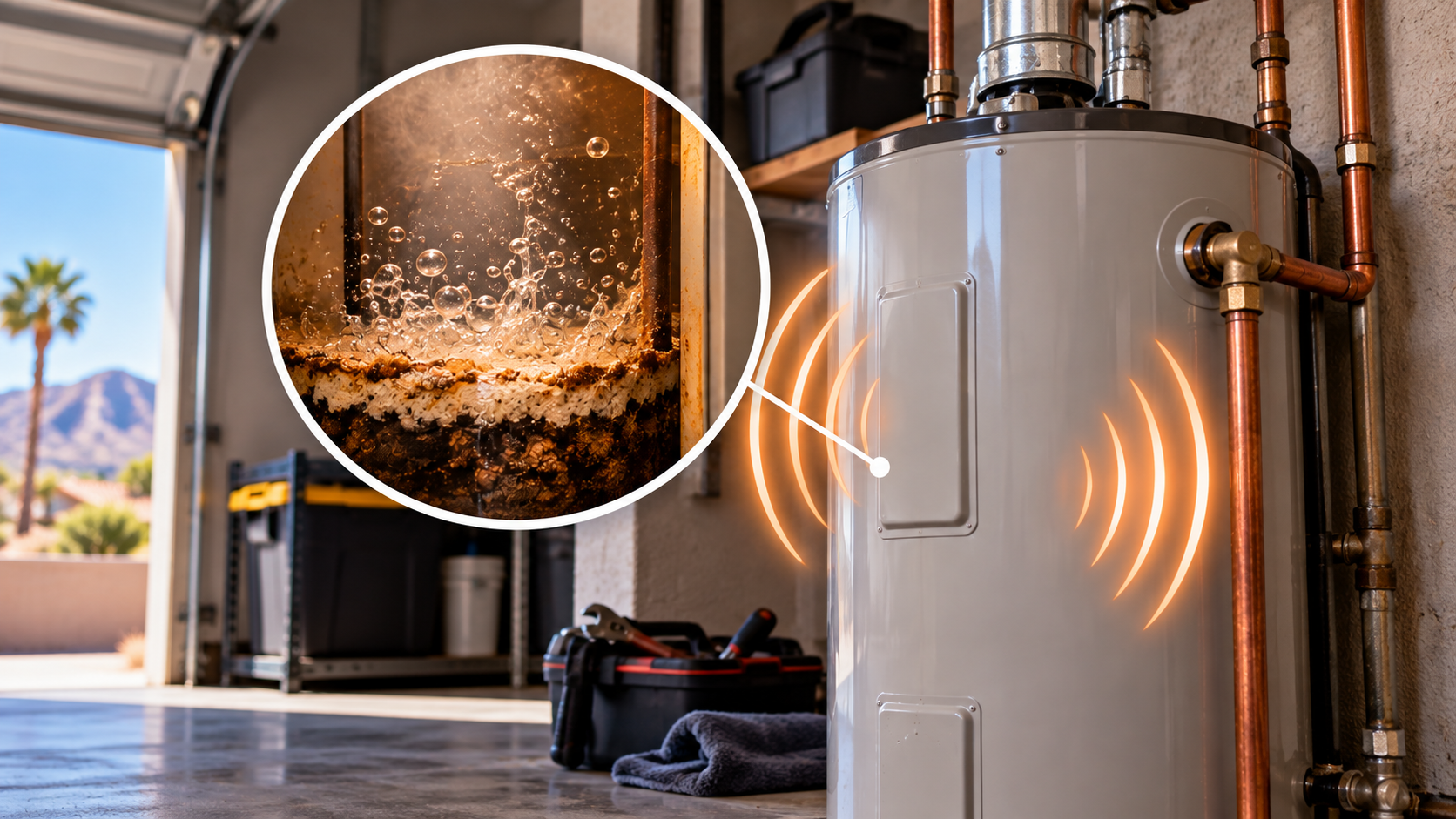
Popping or rumbling from a traditional tank-style water heater can occur when sediment accumulates at the bottom of the tank.

Every time your water heater fills, minerals and other material present in the water enter the tank with it. As the water is repeatedly heated, some of that material can settle toward the bottom.

Over time, a layer of sediment can develop.

Water can become trapped beneath or within that sediment. When the burner or heating element heats the tank, that trapped water heats and moves through the buildup.

The resulting bubbling and movement can create the popping, crackling, or rumbling sounds you hear from outside the tank.

Las Vegas Hard Water Can Make Sediment a Bigger Concern

If you’ve lived in Southern Nevada for long, you’ve probably seen evidence of our hard water.

That familiar white or chalky material around faucets, showerheads, and fixtures comes from minerals dissolved in the water.

Those minerals don’t only appear where you can see them.

A traditional water heater continuously processes the same mineral-rich water, which means deposits and sediment can accumulate inside the tank over time.

The amount of buildup will vary based on the home’s water, maintenance history, water treatment, usage, and age of the water heater.

That’s one reason routine water heater maintenance can be especially useful in Las Vegas and Henderson.

Is a Rumbling Water Heater Dangerous?

A noisy water heater doesn’t automatically mean it’s about to fail.

However, persistent or increasingly loud noises shouldn’t simply be ignored.

Heavy sediment buildup can make the water heater work harder to heat the water effectively. Depending on the condition and age of the unit, unusual noises may also be one indication that the heater deserves inspection or maintenance.

The sound itself isn’t enough to diagnose the condition of the water heater.

A relatively new unit with sediment buildup is a different situation from an older tank showing corrosion, leaking water, and other signs of deterioration.

Looking at the entire condition of the system matters.

Other Water Heater Sounds to Pay Attention To

Not every strange water heater sound is caused by sediment.

Different noises can potentially point toward different parts of the system.

Popping or Crackling

Sediment or mineral buildup inside a tank is one possible cause, particularly when the sound occurs while the water is heating.

Rumbling

A deeper rumbling sound can also be associated with sediment moving around at the bottom of a tank during heating.

Hissing

A hissing sound can have several potential causes depending on whether the water heater is gas or electric and where the sound originates.

Banging or Knocking

Not every banging sound actually originates inside the water heater. Plumbing pipes can also make noise as water flow changes.

Dripping or Sizzling

If you hear dripping or sizzling around a water heater, look for signs of moisture. Water contacting a hot component can create unusual sounds and may indicate a leak that needs attention.

Because several problems can produce similar noises, identifying exactly where the sound is coming from is important.

Can Flushing a Water Heater Help?

Flushing a traditional tank water heater is intended to remove accumulated sediment from the bottom of the tank.

For a water heater that is otherwise in good condition, routine flushing can be an important part of maintenance—particularly in an area with hard water like Southern Nevada.

However, the condition and maintenance history of the water heater matter.

An older tank that hasn’t been maintained for years isn’t necessarily the same situation as a newer unit receiving routine service. If you’re unsure about the condition of your water heater, having it inspected before deciding what maintenance it needs is a sensible approach.

How Often Should a Water Heater Be Flushed in Las Vegas?

There isn’t one maintenance interval that’s right for every home.

Southern Nevada’s hard water can cause sediment to accumulate faster than homeowners may expect, so water heaters here may benefit from more frequent attention than units operating with softer water.

Pipe Pros generally recommends having a traditional tank water heater flushed about every six months in Southern Nevada.

For homes with a properly operating, high-performing water softener, that interval may sometimes be extended to approximately 12 months depending on the condition of the system and water heater.

The age of the unit, household water usage, water quality, and previous maintenance should all be considered.

Don’t Forget About the Anode Rod

Sediment isn’t the only maintenance consideration inside a traditional water heater.

The anode rod is designed to help protect the steel tank against corrosion. It does this by deteriorating over time so the tank itself doesn’t corrode as quickly.

Eventually, an anode rod can become depleted.

Having the anode rod inspected and replacing it when appropriate can be an important part of maximizing the useful life of a traditional tank water heater.

This is particularly worth discussing if you’re already having the unit inspected because of noises or sediment concerns.

When Is Noise a Sign That Your Water Heater May Need More Than Maintenance?

Age and overall condition matter.

If your water heater is making unusual noises and you also notice other problems, it may be time for a more thorough evaluation.

Watch for:

* Rust or visible corrosion
* Water around the tank
* Reduced hot-water capacity
* Inconsistent water temperatures
* Discolored hot water
* Repeated problems despite maintenance
* A tank approaching or beyond its expected service life

At some point, continuing to repair an aging tank may make less sense than replacing it.

A professional inspection can help determine which situation you’re dealing with.

Should You Ignore a Popping Water Heater If It Still Works?

Probably not.

The fact that you’re still getting hot water doesn’t necessarily mean everything inside the tank is in ideal condition.

Think of the noise as information.

If your water heater suddenly starts making sounds it didn’t make before—or those sounds are becoming louder or more frequent—it’s worth figuring out why.

Sometimes maintenance may be all that’s needed. In other cases, the noise may be one of several signs that the unit is aging or developing a problem.

Is Your Water Heater Making Noise in Las Vegas?

If your water heater is popping, rumbling, knocking, or making sounds you haven’t heard before, Pipe Pros can help determine what’s causing it.

Pipe Pros serves homeowners throughout Las Vegas and Southern Nevada with professional water heater and plumbing services. Whether your tank needs routine maintenance, further diagnosis, or it’s time to discuss replacement, understanding the condition of the system is the place to start.

Water heater making strange noises? Contact Pipe Pros for professional water heater service in Las Vegas and Southern Nevada.


Disclaimer: This article was created by Two Four Media for general informational purposes only and is not intended as professional plumbing advice. Plumbing systems and situations can vary. For questions about your specific plumbing needs, diagnosis, repairs, or service, please contact Pipe Pros directly.

Slab Leak Warning Signs Southern Nevada Homeowners Shouldn’t Ignore

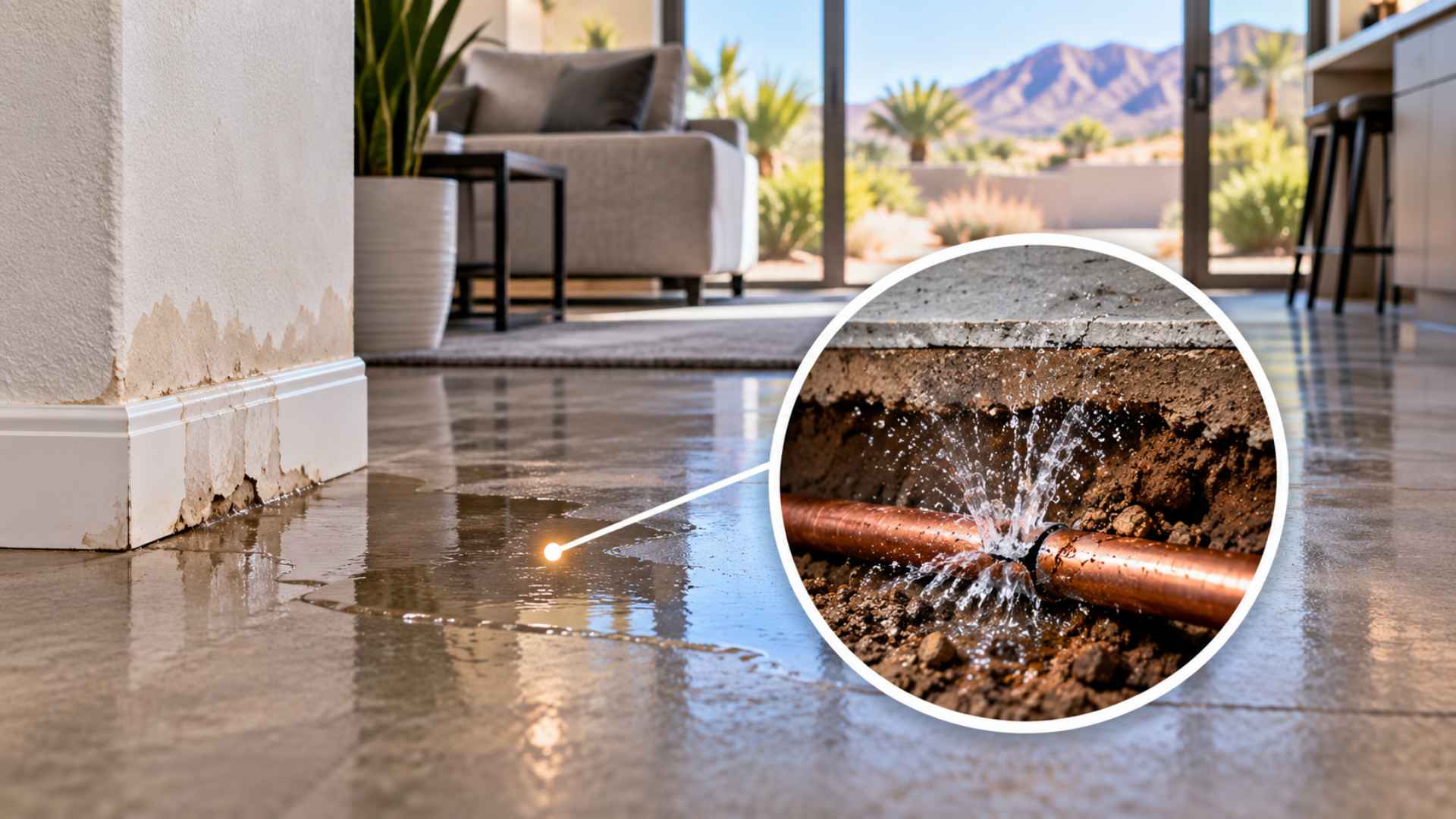
A plumbing leak under your home is easy to miss. Unlike a dripping faucet or leaking pipe beneath a sink, a slab leak can develop underneath the concrete foundation with very few obvious signs at first.

That can make early detection especially important.

Many homes throughout Las Vegas, Henderson, and Southern Nevada are built on concrete slab foundations, with portions of the plumbing running beneath or through the slab. If one of those water lines develops a leak, water can escape beneath the home before you ever see it.

Fortunately, slab leaks often leave clues. Here are some warning signs Southern Nevada homeowners should know.

What Is a Slab Leak?

A slab leak is generally a leak in a water line located beneath a home’s concrete foundation.

These leaks can develop for several reasons, including pipe deterioration, corrosion, movement, installation issues, or damage that develops over time.

Because the leaking pipe isn’t readily visible, determining exactly where the problem is located may require professional leak detection rather than simply looking for water.

1. An Unexplained Increase in Your Water Bill

One of the first signs of a hidden plumbing leak may show up on your monthly water bill.

If your household’s water use hasn’t changed but your bill suddenly increases, water may be escaping somewhere in the plumbing system.

A higher bill doesn’t automatically mean you have a slab leak. Running toilets, irrigation problems, dripping fixtures, and other leaks can also increase water consumption.

But an unexplained increase—especially when combined with other warning signs—is worth investigating.

2. You Hear Running Water When Everything Is Turned Off

Your home should generally be quiet when nobody is using water.

If you hear water running, hissing, or flowing when faucets, showers, toilets, appliances, and irrigation are all off, there may be a leak somewhere in the system.

With a slab leak, the sound can sometimes appear to come from the floor or inside a wall near the foundation.

Don’t assume an unexplained sound of running water is normal.

3. Warm or Hot Spots on the Floor

This is one of the more distinctive potential signs of a leak involving a hot-water line.

If hot water is escaping beneath the slab, it may warm the concrete and flooring above it.

You might notice that one area of tile, laminate, or another flooring surface feels noticeably warmer than the surrounding floor.

A warm spot doesn’t prove there’s a slab leak, but an unexplained hot area—particularly when combined with increased water usage or other plumbing symptoms—deserves attention.

4. Damp Flooring or Unexplained Moisture

Water from beneath the slab can eventually find its way into areas where it becomes visible.

Depending on the location and severity of the leak, you may notice:

* Damp carpet
* Moisture along baseboards
* Discoloration in flooring
* Warped or lifting flooring
* Water appearing without an obvious source
* Dampness near an interior wall

In Southern Nevada’s dry climate, unexplained indoor moisture can be particularly noticeable.

If you repeatedly dry an area only for the moisture to return, there may be a hidden source.

5. Your Water Meter Keeps Moving

Your water meter can provide another clue that water is being used somewhere on the property.

Turn off faucets and water-using appliances and make sure nobody is using water inside or outside the home.

If the meter continues indicating water usage, there may be a leak somewhere in the system.

This doesn’t tell you where the leak is located, but it can help establish that water may be escaping when it shouldn’t be.

6. Water Pressure Has Suddenly Dropped

A significant leak can affect the amount of water reaching your fixtures.

If you’ve noticed a sudden or unexplained drop in water pressure throughout your home, a plumbing leak is one possible cause.

There are several other reasons for low water pressure, including pressure-regulator problems, partially closed valves, mineral buildup, or water-supply issues.

But when low pressure occurs alongside a higher water bill, sounds of running water, or unexplained moisture, it’s worth having the plumbing checked.

7. Cracks, Flooring Changes, or Baseboard Damage

Water moving beneath or around a home’s slab can sometimes contribute to visible changes inside the house.

You may notice flooring beginning to lift, baseboards becoming damaged, or cracks that weren’t previously present.

Not every crack is caused by plumbing. Homes and concrete foundations can develop cracks for many reasons.

The important thing is to look at the complete picture. New physical changes combined with signs of unexplained water can point toward a plumbing issue that needs further investigation.

8. Musty or Unusual Odors

Southern Nevada may be dry outside, but moisture trapped beneath flooring or inside building materials can create conditions for musty odors.

If an area of your home suddenly smells damp or musty and you can’t identify an obvious source, hidden moisture may be present.

Simply covering the smell doesn’t address whatever is causing it.

Finding the moisture source is the important part.

Why Do Slab Leaks Happen?

There isn’t one single cause.

Depending on the home and plumbing system, leaks beneath a slab may be associated with aging or deteriorating pipes, corrosion, movement, abrasion, water conditions, installation problems, or other damage.

That’s why properly diagnosing the location and cause matters.

Finding evidence that water is leaking is only the first step. The next is determining where it’s coming from and the appropriate way to repair it.

Can You Find a Slab Leak Without Tearing Up the Floor?

Homeowners sometimes imagine that finding an underground leak means immediately tearing into floors throughout the house.

That’s not necessarily the case.

Professional leak detection can help narrow down the location of a hidden plumbing leak before decisions are made about accessing or repairing the affected line.

The appropriate method depends on the plumbing system, location of the leak, construction of the home, and other factors.

This is one reason professional diagnosis is valuable when a slab leak is suspected.

Don’t Ignore a Possible Slab Leak

A hidden water leak generally doesn’t improve on its own.

Even if the symptoms initially seem minor, continuing water loss can increase utility costs and potentially contribute to damage around the affected area.

Pay particular attention when several warning signs occur together.

For example, a higher water bill by itself could have many explanations. But a higher bill combined with a warm floor, sounds of running water, and a meter showing continued usage is much more reason to investigate.

When Should You Call a Plumber?

Consider having your plumbing checked if you notice:

* An unexplained increase in water usage
* Running-water sounds when fixtures are off
* Warm or hot areas on the floor
* Damp flooring or baseboards
* Unexplained indoor moisture
* A water meter indicating continued usage
* Sudden changes in water pressure
* Several slab-leak warning signs occurring together

The sooner the source is identified, the sooner you can determine what needs to be done.

Think You May Have a Slab Leak in Las Vegas?

If you’re noticing signs of a possible hidden plumbing leak, Pipe Pros can help determine what’s happening.

Pipe Pros serves homeowners throughout Las Vegas and Southern Nevada with professional plumbing and leak-detection services. Rather than guessing where water may be coming from, the goal is to identify the source and determine the appropriate next step for your home.

Concerned about a possible slab leak? Contact Pipe Pros for professional plumbing service in Las Vegas and Southern Nevada.


Disclaimer: This article was created by Two Four Media for general informational purposes only and is not intended as professional plumbing advice. Plumbing systems and situations can vary. For questions about your specific plumbing needs, diagnosis, repairs, or service, please contact Pipe Pros directly.

Why Is My Water Pressure Suddenly Low in Las Vegas?

You turn on the shower and suddenly the water pressure isn’t what it used to be. Maybe the kitchen faucet seems weak, the shower slows to a trickle when another fixture is running, or the entire house feels like it has lost water pressure.

Low water pressure can be a minor issue with a single faucet or a sign of a larger plumbing problem. For homeowners in Las Vegas, Henderson, and throughout Southern Nevada, mineral buildup from our hard water can also contribute to restricted water flow over time.

The first step is figuring out whether the problem is happening at one fixture or throughout the entire home.

Is the Low Water Pressure at One Fixture or Throughout the House?

This is one of the easiest ways to narrow down the problem.

If only one faucet or shower has low pressure, the issue is probably located at or near that fixture.

If water pressure has dropped throughout the entire house, the cause could involve the home’s main water supply, pressure regulator, plumbing system, or even a leak.

Try several fixtures around your home, using both hot and cold water. That can give you a better idea of how widespread the problem is.

1. A Faucet Aerator or Showerhead May Be Clogged

If the problem is limited to one faucet or shower, start with the fixture itself.

Las Vegas Valley water contains dissolved minerals that can leave the familiar white, chalky buildup you see around faucets and showerheads. Over time, those deposits can also restrict the small openings that water passes through.

A clogged faucet aerator or showerhead can make it seem like your home has lost water pressure even when the plumbing system itself is operating normally.

If one fixture has noticeably less flow than the others, mineral buildup is one of the first things worth checking.

2. Southern Nevada’s Hard Water Can Contribute to Buildup

Hard water is a fact of life in Las Vegas.

The minerals in our water can accumulate on fixtures and inside portions of a plumbing system over time. The amount of buildup and its effect on water flow will depend on the home’s plumbing, age, water treatment, and other factors.

This is especially worth considering when water pressure has gradually declined rather than dropping suddenly.

If you’re seeing significant mineral deposits around faucets and showerheads while also noticing reduced water flow, the two may be related.

3. Your Pressure Regulator Could Be the Problem

Many homes use a pressure-reducing valve, commonly called a pressure regulator, to control the pressure of water entering the house.

If that regulator begins to malfunction, you may notice a significant change in water pressure throughout the home.

Pressure regulator problems aren’t always limited to low pressure. A failing regulator can potentially result in pressure that is too low, too high, or inconsistent.

Because excessive water pressure can put unnecessary stress on plumbing fixtures and components, this isn’t something you want to solve simply by adjusting things until the shower feels stronger.

A plumber can measure the home’s actual water pressure and determine whether the regulator is operating correctly.

4. A Partially Closed Valve Can Restrict Water Flow

Sometimes the explanation is surprisingly simple.

Your home’s water supply has shutoff valves that control water flow. If a main valve isn’t completely open, it can restrict the amount of water reaching fixtures throughout the house.

This may happen after plumbing repairs, maintenance, or other work involving the home’s water supply.

If your water pressure suddenly changed immediately after plumbing work, a valve position may be worth checking.

5. Low Water Pressure Can Be a Sign of a Leak

A plumbing leak can reduce the amount of water reaching your fixtures.

Some leaks are obvious. Others can occur behind walls, beneath floors, underground, or in areas that aren’t easily visible.

Low water pressure alone doesn’t necessarily mean you have a leak, but pay attention if it occurs along with other warning signs, including:

* An unexplained increase in your water bill
* Damp or discolored walls or ceilings
* Water pooling where it shouldn’t
* The sound of running water when fixtures are off
* Unexplained wet areas outside
* A water meter that continues moving when no water is being used

If you suspect a leak, having the problem investigated quickly can help prevent additional water damage.

6. Is the Problem Only With Hot Water?

There’s another useful test you can perform.

Does the low pressure affect both hot and cold water, or only the hot side?

If cold-water pressure seems normal but hot-water flow has dropped throughout the house, the issue may be related to the water heater or hot-water plumbing rather than the home’s entire water supply.

This distinction can help narrow down where the problem is occurring.

7. Your Neighborhood Could Be Experiencing a Temporary Water-Supply Issue

Not every water-pressure problem originates inside your house.

Utility work, maintenance, a water-main issue, or other temporary conditions can sometimes affect water pressure in an area.

If your pressure dropped suddenly, especially without any other signs of a plumbing problem, it can be worth determining whether neighboring homes are experiencing the same thing.

If your neighbors have normal pressure and yours remains low, the problem is more likely specific to your property.

Why Does My Water Pressure Drop When Someone Else Uses Water?

A small change in flow when several fixtures are operating can be normal.

A dramatic drop is different.

If taking a shower becomes difficult whenever someone runs the washing machine, flushes a toilet, or turns on another faucet, your plumbing system may not be delivering enough flow when demand increases.

Possible causes can include restrictions, valves, pressure-regulation problems, buildup, or issues with the home’s plumbing.

A plumber can test the system rather than guessing which component is responsible.

Should You Increase Your Home’s Water Pressure Yourself?

Be careful here.

More pressure isn’t automatically better.

Water pressure that is too high can place additional stress on faucets, supply lines, appliances, valves, and other plumbing components. If your home suddenly has low pressure, it’s better to identify the cause than simply try to increase it.

Knowing the actual water pressure coming into the home is an important part of diagnosing the problem.

When Should You Call a Plumber for Low Water Pressure?

A clogged showerhead or faucet aerator may be something you can address yourself.

It’s time to investigate further when the problem is more widespread or keeps returning.

Consider calling a plumber if:

* Water pressure is low throughout the house
* The pressure dropped suddenly without an obvious reason
* Hot-water pressure is significantly lower than cold
* Pressure changes dramatically when multiple fixtures are used
* You suspect a pressure regulator problem
* You notice signs of a possible water leak
* Cleaning the affected fixture doesn’t solve the problem
* Water pressure continues getting worse

Finding the cause is especially important if the change happened suddenly.

Low Water Pressure in Your Las Vegas Home?

If your shower doesn’t have the pressure it used to or water flow throughout your home has noticeably changed, Pipe Pros can help determine what’s causing the problem.

Pipe Pros serves homeowners throughout Las Vegas and Southern Nevada with professional plumbing services. Whether the problem is isolated to a fixture or involves the home’s larger plumbing system, identifying the cause is the first step toward fixing it correctly.

Experiencing low water pressure? Contact Pipe Pros to schedule plumbing service in Las Vegas and Southern Nevada.


Disclaimer: This article was created by Two Four Media for general informational purposes only and is not intended as professional plumbing advice. Plumbing systems and situations can vary. For questions about your specific plumbing needs, diagnosis, repairs, or service, please contact Pipe Pros directly.

Why Does My Las Vegas Home Keep Getting Clogged Drains?

A clogged drain every once in a while is a normal plumbing problem. But if you’re constantly reaching for the plunger, dealing with slow drains, or having the same drain back up again a few weeks after clearing it, there may be a bigger issue somewhere in your plumbing system.

For homeowners in Las Vegas and across Southern Nevada, recurring drain problems can come from everything from everyday buildup to problems deeper inside the home’s drain or sewer lines.

Here are some of the most common reasons drains keep clogging—and when it may be time to have a plumber take a closer look.

1. Buildup Inside Your Drain Lines

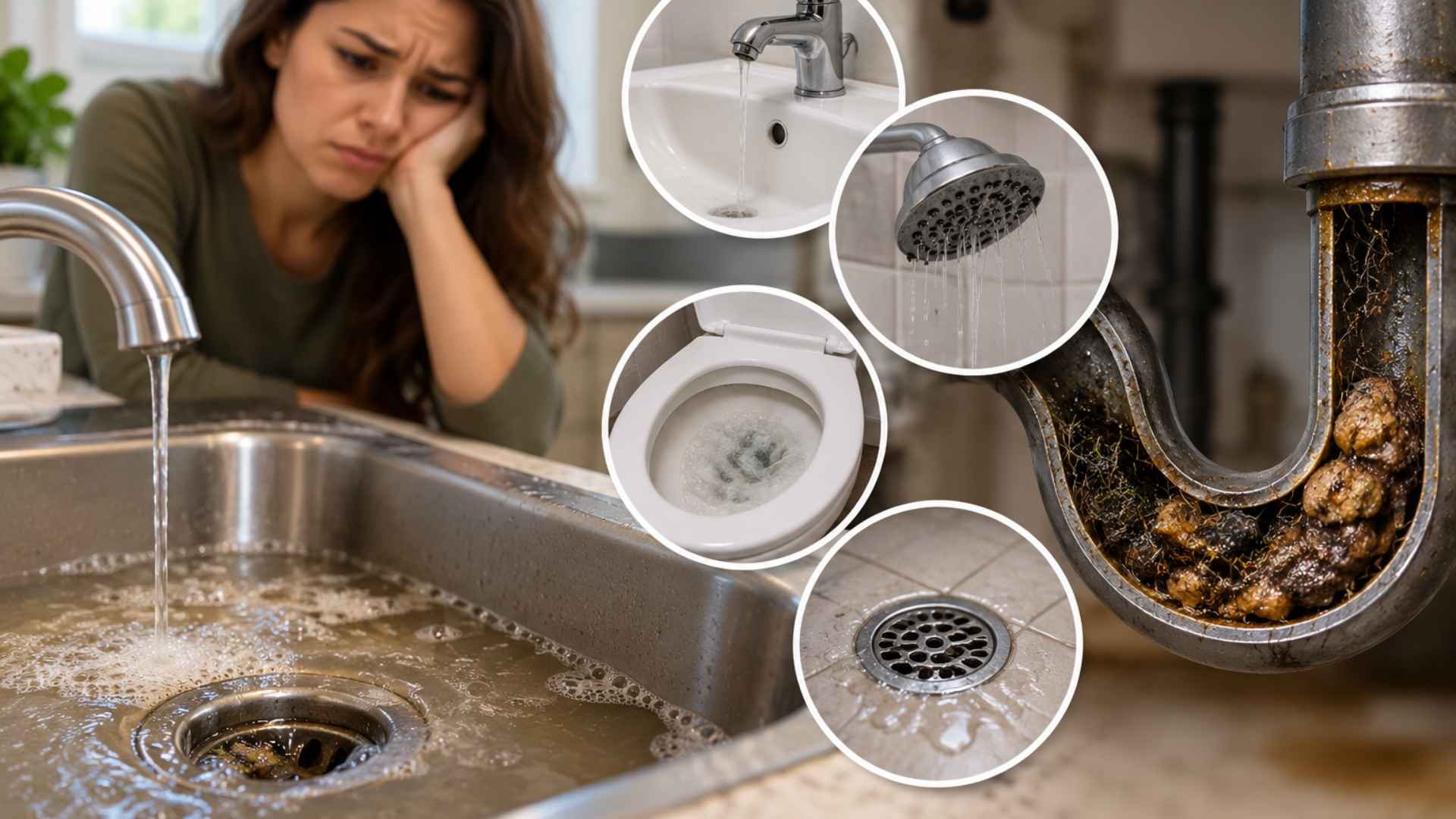
Most clogged drains don’t happen overnight. Material slowly collects along the inside of the pipe until there isn’t enough room for water to flow normally.

In kitchen drains, common culprits include:

* Grease and cooking oils
* Food particles
* Soap and detergent residue

Bathroom drains often collect:

* Hair
* Soap scum
* Toothpaste
* Shaving products
* Skin and cosmetic products

You may clear enough of the blockage to get the water moving again without actually removing all of the buildup. That’s one reason the same drain can become clogged repeatedly.

2. You May Have a Problem Deeper in the Drain Line

When one sink drains slowly, the problem is usually somewhere near that fixture.

When several drains throughout the house are slow or backing up at the same time, however, the problem may be farther down the plumbing system.

Pay attention if you notice:

* Multiple slow drains
* Toilets bubbling or gurgling
* Water backing up into a tub or shower
* Strange sounds after flushing a toilet
* Sewage odors coming from drains
* Problems that return shortly after a drain has been cleared

These can indicate a blockage in a larger drain or sewer line rather than an isolated clogged sink.

3. What Goes Down the Drain Matters

Many recurring clogs are caused by things that shouldn’t be going into the plumbing system in the first place.

Kitchen grease is one of the biggest offenders. Hot grease may pour easily down the drain, but it can cool and stick to the inside of the pipes. Other material then attaches to it, gradually restricting the line.

Toilets can also become clogged when items other than toilet paper and human waste are flushed. Wipes, paper towels, hygiene products and other materials may not break down the way toilet paper does.

Even products marketed as “flushable” can contribute to plumbing problems.

4. The Age and Condition of Your Plumbing Can Play a Role

Las Vegas has experienced decades of rapid growth, but Southern Nevada also has plenty of established neighborhoods with older plumbing systems.

Over time, drain lines can develop problems that make recurring clogs more likely. Depending on the type and age of the plumbing, these can include deterioration, corrosion, shifting pipes or damaged sections of line.

If you live in an older home in Las Vegas, Henderson or another established Southern Nevada neighborhood and are repeatedly clearing the same drains, the condition of the plumbing itself may be worth investigating.

5. Tree Roots Can Cause Sewer-Line Problems

Trees and landscaping can create another problem underground.

Roots naturally seek moisture and can enter sewer lines through small cracks, joints or damaged areas. Once inside, they can continue growing and catch debris moving through the pipe.

The result may begin as an occasional slow drain and eventually become repeated backups or a more serious sewer-line blockage.

Clearing the immediate obstruction may restore flow temporarily, but it won’t necessarily solve the underlying problem if roots or pipe damage remain.

6. The Clog May Never Have Been Completely Removed

A drain working again doesn’t always mean the problem is gone.

Basic plunging or other temporary measures may create a small opening through a blockage while leaving material attached to the pipe. Water begins flowing again, so the problem appears solved—until more debris accumulates.

If a drain repeatedly clogs in the same location, professional drain cleaning can help determine whether there is a more substantial obstruction that needs to be addressed.

Should I Use Chemical Drain Cleaner?

It can be tempting to grab a bottle of chemical drain cleaner when water stops moving, but repeatedly pouring harsh chemicals into your plumbing isn’t a good long-term strategy.

Chemical products may not completely remove the material causing the blockage, particularly when the problem is deeper in the plumbing system. Depending on the plumbing and product being used, repeated chemical treatments can also be hard on pipes.

If you’re dealing with a recurring clog, identifying why it keeps happening is usually more useful than repeatedly treating the symptom.

When Should You Call a Plumber for a Clogged Drain?

A simple clog that clears and doesn’t return may not require professional attention.

Recurring problems are different.

Consider having your plumbing checked if:

* The same drain keeps clogging
* Several drains are running slowly
* You hear frequent bubbling or gurgling
* Water backs up into another fixture
* You notice sewer odors
* Plunging only fixes the problem temporarily
* You suspect a main drain or sewer-line issue

A plumber can determine whether you’re dealing with a localized blockage or something farther down the system.

Dealing With Recurring Clogged Drains in Las Vegas?

If your drains keep backing up, don’t keep treating the same problem over and over.

Pipe Pros can help diagnose clogged and slow drains and determine what’s causing the problem. We serve homeowners throughout Las Vegas and Southern Nevada with professional plumbing and drain services.

Whether you’re dealing with a stubborn kitchen sink, a slow shower drain or signs of a larger drain-line problem, the Pipe Pros team can help get things flowing again—and help determine why the problem keeps coming back.

Need help with a clogged or slow drain? Contact Pipe Pros to schedule plumbing service in Las Vegas and Southern Nevada.


Disclaimer: This article was created by Two Four Media for general informational purposes only and is not intended as professional plumbing advice. Plumbing systems and situations can vary. For questions about your specific plumbing needs, diagnosis, repairs, or service, please contact Pipe Pros directly.